English
 Español
 tiếng việt
 русский
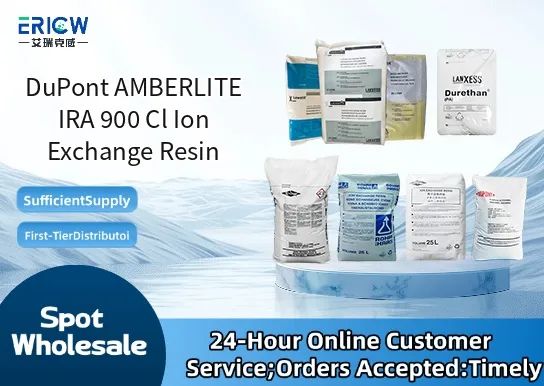
Highly crosslinked macroporous strong base anion exchange resin with Type I quaternary ammonium functional groups.
Excellent chemical and thermal stability, suitable for repeated regeneration cycles in demanding industrial environments.
Superior mechanical strength and abrasion resistance, minimizing fines generation during hydraulic cycling.
Consistent particle size distribution ensures uniform flow characteristics and low pressure drop in column operation.
Optimized for high chloride form capacity and efficient removal of multivalent anions such as sulfate, nitrate, and chromate.
Decolorization and purification of sugar syrups in the food and beverage industry.
Removal of nitrate and sulfate from potable water supplies.
Pharmaceutical-grade water polishing in purified water (PW) and water for injection (WFI) systems.
Recovery and concentration of valuable anions in metal finishing and electroplating rinse streams.
Pretreatment of feedwater for reverse osmosis and mixed-bed deionization systems.
| Chemical Type | Strong base anion exchange resin (Type I quaternary ammonium) |
| Product Form | Chloride form |
| Appearance | Beige to light brown spherical beads |
| Functional Group | –N(CH₃)₃⁺ Cl⁻ |
| Matrix Structure | Styrene-divinylbenzene copolymer, macroporous |
| Ion Exchange Capacity (min.) | 1.1 eq/L (dry basis) |
| Moisture Content | 48 – 55% (as shipped) |
| Particle Size Range | 0.3 – 1.2 mm (95% retained on 0.3 mm sieve, >95% passes 1.2 mm sieve) |
Q1: What is the primary functional group and ionic form of AMBERLITE IRA 900 Cl resin?
A: AMBERLITE IRA 900 Cl is a strongly basic anion exchange resin in the chloride (Cl⁻) form, featuring quaternary ammonium functional groups attached to a styrene-divinylbenzene copolymer matrix.
Q2: Can this resin be used for nitrate removal from drinking water?
A: Yes, AMBERLITE IRA 900 Cl is commonly selected for selective nitrate removal in potable water treatment due to its high affinity for multivalent anions and favorable selectivity sequence under typical municipal water conditions.
Q3: How does the resin perform in the presence of sulfate or bicarbonate ions?
A: Sulfate exhibits higher selectivity than nitrate or chloride on this resin, which may reduce nitrate capacity in high-sulfate feedwaters; bicarbonate competes moderately and is typically managed through system design, such as staged or split-bed configurations.
Q4: Is AMBERLITE IRA 900 Cl suitable for pharmaceutical or food-grade applications?
A: The resin is manufactured and tested to meet industry expectations for use in purification processes supporting pharmaceutical intermediates and food-contact water systems; users must validate compliance with applicable regulatory requirements for their specific application and jurisdiction.
Contact With Us:
E-mail: wangxingqiang@ericwchem.com
Have a Questions? Call Us:
Add:
Building A1, Jiete Industrial Park, Huangpu District, Guangzhou City, Guangdong Province, China