English
 Español
 tiếng việt
 русский
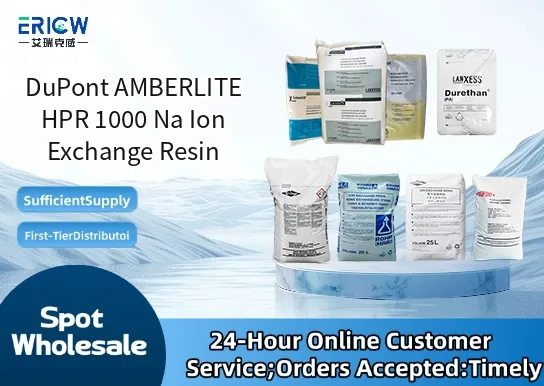
High-capacity, gel-type strong acid cation exchange resin in sodium form.
Engineered for superior physical and chemical stability in demanding industrial water treatment cycles.
Optimized bead uniformity and high mechanical strength to minimize pressure drop and attrition loss.
Low soluble organic compound (SOC) extractables, supporting compliance with stringent purity requirements.
Consistent performance across variable feedwater hardness and flow conditions.
Industrial boiler feedwater softening in power generation and manufacturing facilities.
Pretreatment for reverse osmosis (RO) and deionization (DI) systems.
Process water conditioning for food & beverage production and pharmaceutical utilities.
Hardness removal in closed-loop cooling water systems.
Regenerable softening service in municipal and commercial water treatment plants.
| Chemical Type | Strong acid cation (sulfonic acid), polystyrene-divinylbenzene gel matrix |
| Product Form | Sodium form (Na⁺) |
| Appearance | Uniform, spherical, translucent amber beads |
| Functional Group | –SO₃⁻Na⁺ |
| Moisture Content | 45–50% (as shipped) |
| Particle Size Range | 0.3–1.2 mm (95% retained on 0.3 mm sieve) |
| Uniformity Coefficient | ≤1.6 |
| Maximum Operating Temperature | 120 °C (248 °F) |
Q1: What is the primary functional form of AMBERLITE HPR 1000 resin upon delivery?
A: AMBERLITE HPR 1000 is supplied in the sodium (Na⁺) form, optimized for softening applications where calcium and magnesium ions are exchanged for sodium ions without introducing hydrogen or hydroxide ions into the process stream.
Q2: Can this resin be used in high-flow or high-pressure industrial water treatment systems?
A: Yes — HPR 1000 features a highly crosslinked polystyrene matrix with uniform spherical beads and enhanced mechanical strength, making it suitable for demanding service conditions including elevated flow rates and pressure-driven systems such as continuous softening or pre-treatment for reverse osmosis.
Q3: How does AMBERLITE HPR 1000 differ from standard gel-type cation resins in terms of performance?
A: Unlike conventional gel-type resins, HPR 1000 is a macroporous strong-acid cation exchanger with superior oxidative stability and faster kinetics, especially in solutions containing oxidizing agents or organic contaminants. Its rigid pore structure also provides improved resistance to fouling and better regeneration efficiency in challenging feedwaters.
Q4: Is AMBERLITE HPR 1000 suitable for food-grade or pharmaceutical water applications?
A: The resin is designed and manufactured to meet requirements for use in water purification systems serving food, beverage, and pharmaceutical industries; however, final regulatory compliance depends on system validation, proper installation, and adherence to applicable local and industry-specific water quality standards.
Contact With Us:
E-mail: wangxingqiang@ericwchem.com
Have a Questions? Call Us:
Add:
Building A1, Jiete Industrial Park, Huangpu District, Guangzhou City, Guangdong Province, China