English
 Español
 tiếng việt
 русский
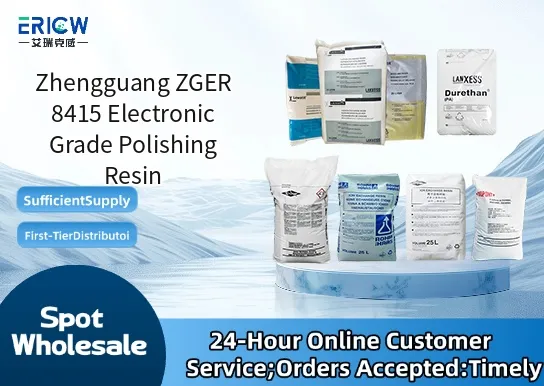
Ultra-low metallic impurity content (<1 ppb Na, K, Ca, Fe, Ni, Cu)
Highly uniform spherical morphology for consistent slurry stability and polishing uniformity
Controlled particle size distribution (D50: 12–14 µm, span <1.3) optimized for CMP process control
Chemically inert in acidic and neutral slurries, ensuring compatibility with common electronic-grade additives
Batch-to-batch reproducibility certified per SEMI F63 and ISO 9001 manufacturing protocols
Chemical Mechanical Planarization (CMP) of copper interconnects in advanced logic and memory devices
Polishing of barrier layers (Ta/TaN) in sub-7 nm semiconductor fabrication
Final surface finishing of silicon carbide (SiC) power device wafers
Post-etch residue removal and surface smoothing for high-aspect-ratio TSV (Through-Silicon Via) structures
| Chemical Type | Sulfonated polystyrene-divinylbenzene copolymer |
| Product Form | Dry spherical resin beads |
| Appearance | Free-flowing white to off-white powder |
| Primary Applications | CMP slurry component for Cu, Ta, and SiC polishing |
| Key Features | Low metal ion leaching, narrow PSD, acid-stable |
| Storage Conditions | Sealed container, 5–30 °C, low humidity |
| Packaging | 5 kg vacuum-sealed aluminum-laminated bag |
| Compliance | SEMI F63, RoHS 3, REACH SVHC-free |
Q1: What distinguishes ZGER 8415 from standard polishing resins used in general industrial applications?
A: ZGER 8415 is specifically engineered for electronic-grade applications, featuring ultra-low ionic impurity content, tightly controlled particle size distribution, and minimal non-volatile residue—critical for high-purity semiconductor and display manufacturing processes where trace contaminants can compromise device yield or reliability.
Q2: Is ZGER 8415 compatible with common aqueous-based chemical mechanical planarization (CMP) slurries?
A: Yes, ZGER 8415 demonstrates stable dispersion and functional performance in neutral-to-weakly alkaline aqueous CMP formulations. Its surface chemistry is designed to support uniform particle suspension and consistent polishing kinetics without inducing aggregation or premature settling under typical slurry storage and circulation conditions.
Q3: How should ZGER 8415 be handled and stored to maintain its electronic-grade integrity?
A: Store in original sealed containers under cool, dry conditions away from direct sunlight and strong oxidizing agents. Once opened, minimize exposure to ambient humidity and airborne particulates; use clean, dedicated handling tools to prevent cross-contamination. For critical applications, consider inert gas blanketing during transfer operations.
Q4: Can ZGER 8415 be used in both silicon wafer and advanced packaging polishing processes?
A: Yes—it is formulated to deliver controlled removal rates and superior surface finish across a range of substrates including silicon, silicon dioxide, low-k dielectrics, and copper barrier layers, making it suitable for front-end-of-line (FEOL), back-end-of-line (BEOL), and 2.5D/3D packaging CMP steps.
Contact With Us:
E-mail: wangxingqiang@ericwchem.com
Have a Questions? Call Us:
Add:
Building A1, Jiete Industrial Park, Huangpu District, Guangzhou City, Guangdong Province, China