English
 Español
 tiếng việt
 русский
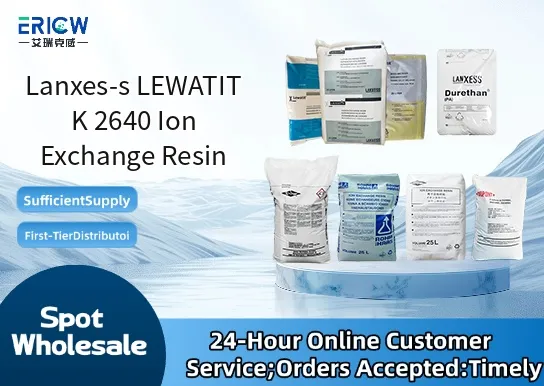
Highly selective for potassium ions (K⁺) in mixed-cation aqueous solutions.
Stable polyacrylic matrix ensures excellent mechanical strength and long service life under repeated regeneration cycles.
Low operating pressure drop due to uniform spherical bead morphology and narrow particle size distribution.
Optimized for high-capacity potassium removal without significant co-adsorption of sodium or calcium.
Compliant with FDA 21 CFR §173.25, suitable for food-grade and pharmaceutical water polishing applications.
Potassium reduction in beverage production water (e.g., soft drinks, bottled water).
Final polishing step in pharmaceutical water systems (PW/WFI pre-treatment).
Removal of potassium from process streams in biotechnology fermentation media preparation.
Targeted ion control in lithium extraction brine purification circuits.
Regulatory-compliant potassium management in nutraceutical ingredient manufacturing.
| Chemical Type | Polyacrylic acid-based chelating resin, potassium-selective functionalized |
| Product Form | Moist, spherical beads |
| Appearance | Off-white to light beige, uniform granules |
| Primary Applications | Potassium ion removal and selective cation exchange |
| Functional Group | Carboxylic acid (–COOH) |
| Ion Form | Potassium (K⁺) form as supplied |
| Particle Size Range | 0.315 – 1.25 mm |
| Moisture Content | Approx. 45 – 50 % (w/w) |
Q1: What is the primary functional group and matrix type of LEWATIT K 2640?
A: LEWATIT K 2640 is a strongly basic anion exchange resin with quaternary ammonium functional groups, based on a macroporous polystyrene-divinylbenzene (PS-DVB) matrix. Its macroporous structure provides enhanced kinetic performance and stability in challenging feed streams.
Q2: In which industrial applications is this resin most commonly deployed?
A: LEWATIT K 2640 is widely used for selective nitrate removal from drinking water and process water, as well as for sulfate and chromate reduction in wastewater treatment. It is also applied in pharmaceutical and fine chemical processes requiring high-purity effluent and robust regeneration performance.
Q3: How does LEWATIT K 2640 differ from gel-type strong base anion resins?
A: Unlike gel-type resins, LEWATIT K 2640’s macroporous structure offers superior resistance to organic fouling, better mechanical stability under repeated swelling/shrinking cycles, and more consistent performance in solutions containing suspended solids or high levels of natural organic matter.
Q4: What regeneration chemicals are recommended, and how does regeneration efficiency compare to conventional resins?
A: Sodium chloride (NaCl) is the standard regenerant, though sodium hydroxide (NaOH) may be used for deeper desorption of weakly ionized species. Due to its macroporous architecture and high functional group density, LEWATIT K 2640 typically achieves higher regeneration efficiency and longer service cycles than many conventional gel-type anion exchangers.
Contact With Us:
E-mail: wangxingqiang@ericwchem.com
Have a Questions? Call Us:
Add:
Building A1, Jiete Industrial Park, Huangpu District, Guangzhou City, Guangdong Province, China