English
 Español
 tiếng việt
 русский
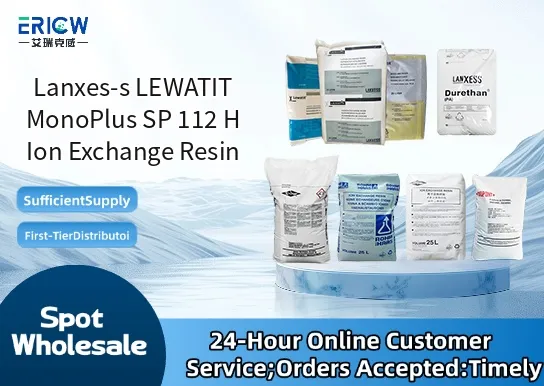
Highly uniform spherical beads ensure consistent hydraulic performance and low pressure drop across packed beds.
Superior chemical stability in strong acid environments, enabling reliable operation in aggressive regeneration conditions.
Optimized kinetic performance for rapid ion exchange kinetics, especially effective for divalent cation removal (e.g., Ca²⁺, Mg²⁺).
Low osmotic swelling behavior provides excellent mechanical integrity and long service life under cyclic loading.
Manufactured to strict ISO 9001 quality standards with full traceability and batch-specific certification.
Deminerilization of boiler feedwater in high-pressure steam generation systems.
Softening of industrial process water for food & beverage, pharmaceutical, and electronics manufacturing.
Pretreatment for reverse osmosis (RO) systems to protect membranes from scaling ions.
Cation removal in ultrapure water (UPW) production for semiconductor fabrication facilities.
Regenerable hydrogen-form polishing step in mixed-bed deionization units.
| Chemical Type | Strong acid cation exchanger (sulfonic acid group) |
| Product Form | Hydrogen form (H⁺) |
| Appearance | Uniform amber spherical beads |
| Functional Group | –SO₃H |
| Matrix Structure | Macroporous polystyrene-divinylbenzene copolymer |
| Particle Size Range | 0.315 – 1.25 mm |
| Moisture Content | 47 – 53 % (as shipped) |
| Ion Exchange Capacity (min.) | 2.0 eq/L (dry base) |
Q1: What is the primary functional group and ionic form of LEWATIT MonoPlus SP 112 H?
A: LEWATIT MonoPlus SP 112 H is a strongly acidic cation exchange resin in the hydrogen (H⁺) form, based on a sulfonic acid functional group grafted onto a highly crosslinked polystyrene-divinylbenzene matrix.
Q2: Is this resin suitable for demineralization of process water in pharmaceutical or food-grade applications?
A: Yes — SP 112 H is commonly selected for high-purity water polishing and demineralization due to its high chemical stability, low extractables, and consistent performance under controlled regeneration conditions. Its suitability for regulated environments depends on system validation, including cleaning protocols and compliance with relevant pharmacopoeial requirements for ion exchange resins.
Q3: How does SP 112 H compare to conventional gel-type strong acid cation resins in terms of kinetics and capacity?
A: As a macroporous monospherical resin, SP 112 H offers improved mass transfer kinetics and better resistance to fouling compared to traditional gel-type resins. Its uniform particle size and defined porosity support higher effective operating capacity, especially in feeds with moderate organic or suspended solids content.
Q4: What are typical regeneration requirements for SP 112 H in softening or dealkalization service?
A: Regeneration is typically performed using mineral acids such as hydrochloric or sulfuric acid. The required acid dosage and concentration depend on service cycle length, influent water composition, and desired effluent quality — but generally align with standard strong acid cation resin practices, with emphasis on complete rinse to minimize residual acidity in product water.
Contact With Us:
E-mail: wangxingqiang@ericwchem.com
Have a Questions? Call Us:
Add:
Building A1, Jiete Industrial Park, Huangpu District, Guangzhou City, Guangdong Province, China