English
 Español
 tiếng việt
 русский
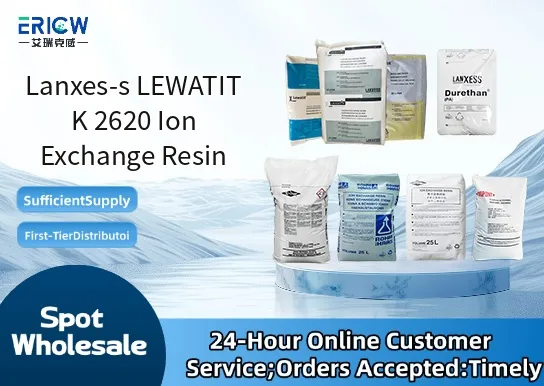
Highly selective for potassium (K⁺) and ammonium (NH₄⁺) ions in complex aqueous matrices.
Macroporous polystyrene-divinylbenzene matrix ensures excellent physical stability and resistance to osmotic shock.
Functionalized with sulfonic acid groups, providing strong acid cation exchange capacity.
Optimized particle size distribution (0.3–1.2 mm) for low pressure drop and uniform flow dynamics in fixed-bed systems.
Regenerable with standard NaCl or HCl solutions, supporting sustainable operational cycles.
Ammonium removal from municipal and industrial wastewater prior to discharge or reuse.
Potassium recovery and concentration in food processing effluents (e.g., potato starch production).
Softening and selective ion removal in pharmaceutical process water systems.
Pre-treatment for reverse osmosis feed water to reduce scaling potential from multivalent cations.
Radioactive cesium (Cs⁺) and strontium (Sr²⁺) capture in nuclear decommissioning and environmental remediation.
| Chemical Type | Strong Acid Cation Exchange Resin |
| Product Form | Moist, spherical beads |
| Appearance | Opaque beige to light brown spheres |
| Matrix | Macroporous polystyrene-divinylbenzene copolymer |
| Functional Group | Sulfonic acid (–SO₃H) |
| Ionic Form | H⁺ (hydrogen form) as supplied |
| Particle Size Range | 0.3 – 1.2 mm |
| Moisture Content | 45 – 50 % (w/w) |
Q1: What is the primary functional group and matrix structure of LEWATIT K 2620?
A: LEWATIT K 2620 is a strongly basic anion exchange resin with quaternary ammonium functional groups, based on a macroporous polystyrene-divinylbenzene (PS-DVB) matrix. This structure provides high chemical stability and good kinetic performance in demanding applications.
Q2: Is LEWATIT K 2620 suitable for use in food-contact or pharmaceutical water purification systems?
A: Yes — LEWATIT K 2620 is designed for high-purity water treatment applications, including those requiring compliance with relevant food-grade and pharmaceutical water standards. It meets typical regulatory expectations for ion exchange resins used in purified water and WFI pre-treatment, subject to proper system validation and regeneration protocols.
Q3: How does LEWATIT K 2620 perform in the presence of organic foulants or oxidizing agents?
A: Its macroporous structure offers enhanced resistance to organic fouling compared to gel-type resins. While it tolerates moderate levels of oxidants under controlled operating conditions, prolonged exposure to high concentrations of chlorine or other strong oxidizers may affect long-term stability and should be minimized through upstream pretreatment.
Q4: What regeneration chemicals are recommended for LEWATIT K 2620?
A: Sodium hydroxide (NaOH) is the standard regenerant for this strong base anion resin. Regeneration efficiency and frequency depend on feedwater quality, operating flow rate, and service cycle design — typically optimized through pilot testing or process simulation.
Contact With Us:
E-mail: wangxingqiang@ericwchem.com
Have a Questions? Call Us:
Add:
Building A1, Jiete Industrial Park, Huangpu District, Guangzhou City, Guangdong Province, China