English
 Español
 tiếng việt
 русский
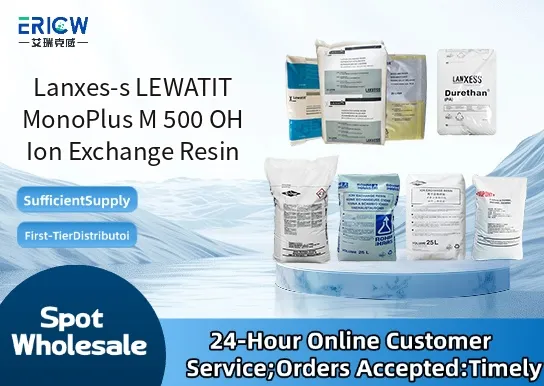
Highly uniform spherical beads ensure consistent hydraulic performance and low pressure drop across columns.
Superior chemical stability in alkaline environments, enabling reliable long-term operation in OH⁻ form.
Optimized macroporous structure provides excellent kinetic performance for rapid ion exchange kinetics.
Low total organic carbon (TOC) extractables, meeting stringent requirements for pharmaceutical and ultrapure water applications.
Manufactured under ISO 9001-certified processes with full traceability and batch-specific quality documentation.
Final polishing step in pharmaceutical-grade purified water (PW) and water for injection (WFI) systems.
Dealkalization and silica removal in high-purity boiler feedwater pretreatment circuits.
Electrodeionization (EDI) stack feed conditioning to protect membranes from scaling ions.
Regenerable anion exchange polishing for semiconductor ultrapure water (UPW) production.
Removal of trace anionic contaminants (e.g., nitrate, sulfate, silicate) in laboratory and analytical water systems.
| Chemical Type | Strongly basic, macroporous, Type I anion exchange resin |
| Product Form | OH⁻ form, fully regenerated and ready-to-use |
| Appearance | Uniform amber spherical beads |
| Functional Group | Quaternary ammonium (–N⁺(CH₃)₃) |
| Moisture Content | 48–55 % (as shipped) |
| Particle Size Range | 0.45–1.25 mm (≥95 %) |
| Uniformity Coefficient | ≤1.6 |
| Maximum Operating Temperature | 60 °C |
Q1: What is the primary functional form of Lanxes-s LEWATIT MonoPlus M 500 OH resin?
A: This resin is supplied in the hydroxide (OH⁻) ionic form, making it a strong base anion exchange resin optimized for deionization, nitrate removal, and other anion-selective applications in water treatment and process streams.
Q2: Is this resin suitable for pharmaceutical or food-grade water polishing?
A: Yes — LEWATIT MonoPlus M 500 OH is manufactured to meet stringent quality requirements for high-purity water production. It is commonly used in pharmaceutical, biotech, and food & beverage applications where low extractables, high chemical stability, and consistent regeneration performance are critical.
Q3: How does the MonoPlus M 500 OH resin differ from conventional gel-type anion resins?
A: It features a macroporous polyacrylate matrix with uniform spherical beads and high mechanical strength, offering superior resistance to organic fouling, improved kinetics for large anions (e.g., sulfate, silicate), and stable performance across varying pH and temperature conditions compared to standard gel-type resins.
Q4: What regeneration chemicals are recommended for this resin?
A: Sodium hydroxide (NaOH) is the standard regenerant. Optimal concentration and dosage depend on service cycle, influent water composition, and system design — typically applied as a dilute solution (e.g., 2–4% w/w) under controlled flow and contact time.
Contact With Us:
E-mail: wangxingqiang@ericwchem.com
Have a Questions? Call Us:
Add:
Building A1, Jiete Industrial Park, Huangpu District, Guangzhou City, Guangdong Province, China