English
 Español
 tiếng việt
 русский
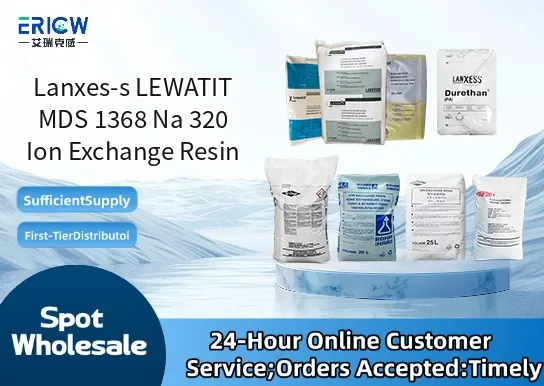
Highly uniform spherical beads with excellent mechanical strength and abrasion resistance.
Optimized for high-capacity sodium-form cation exchange in demanding softening applications.
Low osmotic swelling and superior hydraulic stability across wide pH and temperature ranges.
Consistent particle size distribution ensuring low pressure drop and efficient bed utilization.
Manufactured to strict quality control standards compliant with ISO 9001 and FDA-listed for potable water use.
Industrial boiler feedwater softening for power generation and process steam systems.
Potable water treatment in municipal and commercial drinking water facilities.
Food and beverage processing where consistent sodium-form cation removal is critical.
Pharmaceutical-grade water purification requiring low extractables and high purity performance.
Pre-treatment for reverse osmosis (RO) and electrodeionization (EDI) systems.
| Chemical Type | Sodium-form strong acid cation exchange resin (polystyrene-divinylbenzene matrix) |
| Product Form | Moist, spherical beads |
| Appearance | Amber, transparent, uniform beads |
| Functional Group | Sulfonic acid (–SO₃H, converted to –SO₃Na) |
| Ion Exchange Capacity (min.) | 1.8 mmol/mL (wet volume) |
| Moisture Content | 47–53% (as shipped) |
| Particle Size Range | 0.4–1.2 mm (≥95% retained between 0.315 mm and 1.25 mm sieves) |
| pH Stability Range | 0–14 (short-term exposure); recommended operating range: 1–12 |
Q1: What is the primary functional form and intended application of LEWATIT MDS 1368 Na 320?
A: LEWATIT MDS 1368 Na 320 is supplied in the sodium form and is specifically designed for softening and demineralization applications in low-to-medium pressure industrial water treatment systems, including boiler feedwater preparation and process water polishing.
Q2: How does this resin differ from conventional gel-type cation exchangers?
A: As a macroporous strong acid cation resin, MDS 1368 Na 320 offers superior physical stability, higher resistance to oxidation and osmotic shock, and consistent performance under variable flow conditions—making it especially suitable for challenging feedwaters containing organic fouling potential or fluctuating hardness levels.
Q3: Can this resin be used in high-purity water systems requiring ultralow sodium leakage?
A: While effective for general softening, MDS 1368 Na 320 is not optimized for ultrapure water production where sub-ppb sodium control is required; for such applications, a dedicated high-capacity, low-leach specialty resin or a mixed-bed configuration is typically recommended.
Q4: What regeneration protocol is recommended for optimal service life and capacity recovery?
A: Regeneration is typically performed with sodium chloride brine at standard concentrations (e.g., 8–10% w/w), with adequate contact time and flow rate control; consistent adherence to manufacturer-recommended rinse volumes and backwash procedures helps maintain long-term kinetic efficiency and bed integrity.
Contact With Us:
E-mail: wangxingqiang@ericwchem.com
Have a Questions? Call Us:
Add:
Building A1, Jiete Industrial Park, Huangpu District, Guangzhou City, Guangdong Province, China