English
 Español
 tiếng việt
 русский
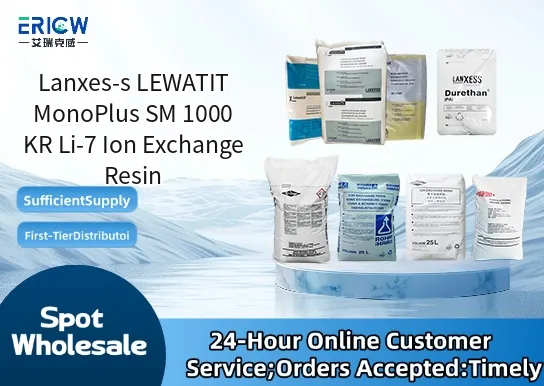
Highly selective lithium-7 (⁷Li) isotope enrichment capability via optimized chelating functional groups.
Monodisperse spherical bead structure ensuring uniform flow distribution and low pressure drop in column operation.
Exceptional chemical and osmotic stability in acidic to neutral aqueous environments, resistant to degradation during repeated regeneration cycles.
Pre-loaded with high-purity lithium-7 ions, minimizing initial conditioning time and enabling immediate use in isotopic separation processes.
Low total organic carbon (TOC) leaching profile, meeting stringent purity requirements for nuclear-grade and pharmaceutical intermediate applications.
Lithium-7 isotope enrichment for molten salt nuclear reactor coolants and tritium breeding blankets.
Purification and isotopic upgrading of lithium hydroxide and lithium carbonate feedstocks for battery-grade materials.
Research-scale lithium isotope separation in national laboratories and academic isotope chemistry programs.
Final polishing step in high-purity lithium salt production for positron emission tomography (PET) radiopharmaceutical synthesis.
Controlled lithium-7 recovery from spent electrolyte streams in advanced lithium-ion battery recycling facilities.
| Chemical Type | Chelating ion exchange resin with iminodiacetic acid functional groups, pre-equilibrated with lithium-7 |
| Product Form | Moist, spherical beads |
| Appearance | Off-white to light beige, free-flowing granular solid |
| Particle Size Range | 0.4–0.8 mm |
| Moisture Content | 45–50% (w/w) |
| Ion Form | Lithium-7 (⁷Li⁺) dominant (>99.98% isotopic purity) |
| Functional Capacity (min.) | 1.8 mmol ⁷Li⁺/g dry resin |
| Storage Condition | Store at 5–35°C; protect from freezing and direct sunlight |
Q1: What is the primary functional advantage of the Li-7 form in this resin?
A: The Li-7 form provides high selectivity for lithium ions in complex aqueous matrices, enabling efficient separation and concentration of lithium from brines or process streams containing competing cations such as Na⁺, K⁺, Mg²⁺, and Ca²⁺.
Q2: Is this resin suitable for continuous industrial-scale lithium recovery processes?
A: Yes — designed for robust performance in fixed-bed and moving-bed ion exchange systems, it offers excellent physical stability, low pressure drop, and consistent capacity retention over multiple regeneration cycles under typical brine processing conditions.
Q3: How does the MonoPlus SM 1000 KR matrix differ from conventional gel-type resins?
A: It features a macroporous polystyrene-divinylbenzene backbone with uniform spherical morphology and optimized pore structure, delivering enhanced kinetics, superior mechanical strength, and improved resistance to fouling in challenging feedwaters with suspended solids or organic content.
Q4: What regeneration protocol is typically recommended for restoring lithium exchange capacity?
A: Regeneration is commonly achieved using dilute lithium chloride or lithium hydroxide solutions; optimal concentration and flow rate depend on operating conditions but generally aim to balance efficiency, chemical consumption, and cycle time without compromising resin integrity.
Q5: Can this resin be used in food-grade or pharmaceutical intermediate purification applications?
A: While the base polymer meets general regulatory expectations for ion exchange materials in industrial water treatment, specific use in food or pharma applications requires validation per end-user compliance requirements and relevant local regulatory guidance — formal food-contact certification is not claimed for this grade.
Contact With Us:
E-mail: wangxingqiang@ericwchem.com
Have a Questions? Call Us:
Add:
Building A1, Jiete Industrial Park, Huangpu District, Guangzhou City, Guangdong Province, China