English
 Español
 tiếng việt
 русский
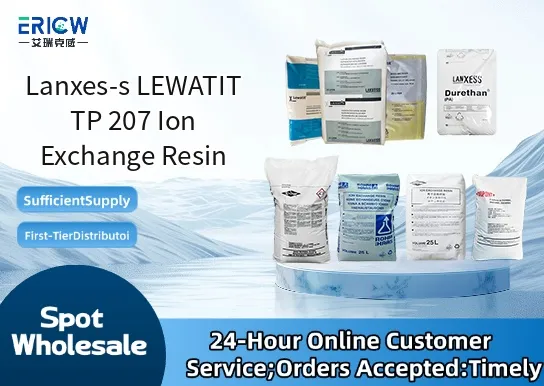
Highly selective for heavy metal ions including Pb²⁺, Cd²⁺, Ni²⁺, and Cu²⁺ in low-concentration aqueous streams.
Stable polyacrylate matrix provides excellent chemical resistance to oxidants, chlorine, and high-pH environments.
Optimized bead uniformity and mechanical strength ensure low pressure drop and extended service life in continuous-flow systems.
Regenerable with mild acid solutions (e.g., dilute HCl or H₂SO₄), enabling sustainable closed-loop operation.
Low soluble organic content minimizes leaching and meets stringent discharge compliance for industrial wastewater treatment.
Removal of toxic heavy metals from electroplating rinse waters.
Treatment of mining effluents and acid mine drainage (AMD).
Purification of process water in semiconductor manufacturing facilities.
Polishing step in pharmaceutical-grade water systems requiring ultra-low metal ion content.
Pre-treatment for reverse osmosis (RO) feed water to prevent membrane fouling by multivalent cations.
| Chemical Type | Polyacrylate-based chelating resin with iminodiacetate functional groups |
| Product Form | Moist, spherical beads |
| Appearance | Beige to light brown, translucent beads |
| Functional Group | Iminodiacetic acid (IDA) |
| Ion Form | Na⁺ form (standard shipping condition) |
| Particle Size Range | 0.3 – 1.2 mm |
| Moisture Content | ~45 – 50% (w/w) |
| Maximum Operating Temperature | 80 °C |
Q1: What is the primary functional group and ionic form of Lanxes-s LEWATIT TP 207?
A: Lanxes-s LEWATIT TP 207 is a strongly acidic cation exchange resin based on a sulfonated polystyrene-divinylbenzene matrix, supplied in the sodium (Na⁺) form for general softening and selective metal ion removal applications.
Q2: Is Lanxes-s LEWATIT TP 207 suitable for food-grade or pharmaceutical water treatment?
A: Yes — this resin is manufactured and tested to meet requirements for use in potable water and hygienic process water systems. It complies with global regulatory expectations for indirect food contact when operated within validated process parameters and regenerated using food-grade regenerants.
Q3: How does Lanxes-s LEWATIT TP 207 differ from standard gel-type cation resins in terms of physical structure and performance?
A: Unlike conventional gel-type resins, TP 207 features a macroporous structure that provides enhanced mechanical stability, superior resistance to organic fouling, and consistent performance across variable feed water qualities — especially in applications with elevated turbidity or oxidant presence.
Q4: What regeneration chemicals are recommended, and how does regeneration efficiency compare to conventional resins?
A: Sodium chloride (NaCl) is the standard regenerant for softening service; for selective metal recovery, dilute mineral acids such as HCl or H₂SO₄ may be used. Due to its macroporous architecture, TP 207 typically achieves more complete regeneration with lower regenerant consumption and reduced rinse water demand compared to many gel-type alternatives.
Contact With Us:
E-mail: wangxingqiang@ericwchem.com
Have a Questions? Call Us:
Add:
Building A1, Jiete Industrial Park, Huangpu District, Guangzhou City, Guangdong Province, China