English
 Español
 tiếng việt
 русский
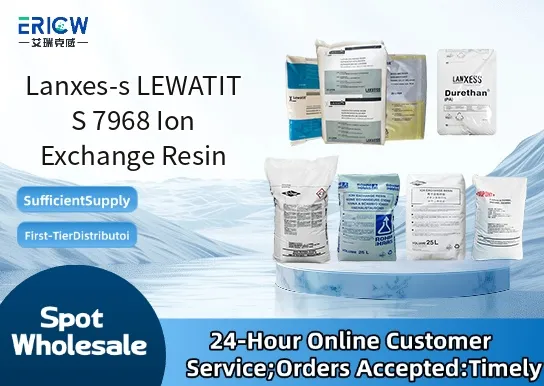
Highly stable macroporous strong base anion exchange resin with Type I functionalization.
Exceptional chemical and osmotic stability, suitable for demanding regeneration cycles and high chloride environments.
Optimized for superior sulfate and nitrate selectivity in low-sulfate feed waters.
Low total organic carbon (TOC) extractables, minimizing post-treatment contamination risks.
Uniform spherical bead morphology ensuring consistent hydraulic performance and reduced pressure drop.
Pharmaceutical-grade water polishing in purified water (PW) and water for injection (WFI) systems.
Removal of trace anions (e.g., silica, sulfate, nitrate) from ultrapure water (UPW) in semiconductor manufacturing.
Final polishing step in power plant boiler feedwater treatment to meet ASTM D1193 Type I specifications.
Pre-treatment for reverse osmosis (RO) and electrodeionization (EDI) systems requiring low-anion feed.
| Chemical Type | Macroporous, Strong Base Anion Exchange Resin (Type I) |
| Product Form | Moist, Sodium Form (Na⁺) |
| Appearance | Uniform amber spherical beads |
| Functional Group | Quaternary ammonium (–N⁺(CH₃)₃) |
| Matrix Structure | Crosslinked polystyrene-divinylbenzene (DVB) |
| Ion Exchange Capacity (min.) | 1.1 eq/L (dry basis) |
| Moisture Content | 45–50 % (w/w) |
| Particle Size Range | 0.315–1.25 mm (95 % retained on 0.315 mm sieve) |
Q1: What is the primary functional group and ionic form of LEWATIT S 7968?
A: LEWATIT S 7968 is a strongly basic anion exchange resin with quaternary ammonium functional groups, supplied in the chloride (Cl⁻) ionic form. It is designed for efficient removal of anionic impurities, including silicates, nitrates, and trace organic acids, from aqueous process streams.
Q2: Is LEWATIT S 7968 suitable for pharmaceutical or food-grade water polishing applications?
A: Yes — LEWATIT S 7968 is manufactured under strict quality control and is commonly used in high-purity water systems for pharmaceutical, biotechnology, and food & beverage industries. Its high chemical stability, low extractables profile, and consistent performance make it appropriate for critical polishing stages, subject to end-user validation and compliance with applicable regulatory requirements.
Q3: How does LEWATIT S 7968 compare to conventional Type I and Type II strong base anion resins in terms of selectivity and regeneration efficiency?
A: LEWATIT S 7968 features a macroporous polystyrene matrix with optimized functional group density and pore structure, offering enhanced selectivity for weakly ionized species (e.g., silica, borate) and improved resistance to organic fouling. Its regeneration efficiency with sodium hydroxide is generally higher than gel-type resins under low-flow or variable-load conditions, supporting longer service cycles and more stable effluent quality.
Q4: What are the recommended storage conditions for this resin?
A: Store LEWATIT S 7968 in its original sealed packaging at temperatures between 5 °C and 40 °C. Avoid freezing and prolonged exposure to direct sunlight or high humidity. Once unpacked, keep the resin moist using deionized water or the manufacturer-recommended storage solution to prevent physical degradation or fines generation.
Contact With Us:
E-mail: wangxingqiang@ericwchem.com
Have a Questions? Call Us:
Add:
Building A1, Jiete Industrial Park, Huangpu District, Guangzhou City, Guangdong Province, China