English
 Español
 tiếng việt
 русский
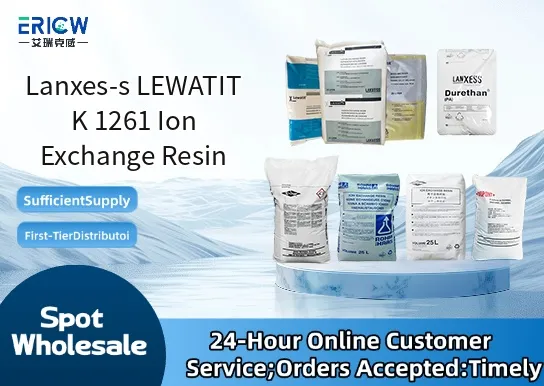
Highly selective for multivalent cations including calcium, magnesium, and heavy metals.
Exceptional chemical and osmotic stability across broad pH range (1–14) and high salt concentrations.
Optimized macroporous structure ensures rapid kinetics and minimal pressure drop in service cycles.
Low fines generation and excellent mechanical strength for extended column life and reduced backwash requirements.
Regenerable with standard acid solutions (e.g., HCl or H₂SO₄), enabling cost-effective reuse in closed-loop systems.
Removal of hardness ions (Ca²⁺/Mg²⁺) in industrial boiler feedwater pretreatment.
Recovery and purification of transition metals (e.g., Ni²⁺, Cu²⁺, Co²⁺) from electroplating rinse streams.
Decontamination of process water in pharmaceutical manufacturing to meet USP/EP conductivity limits.
Pre-concentration of rare earth elements (REEs) from low-concentration leachates in hydrometallurgical operations.
Polishing step in ultrapure water (UPW) systems for semiconductor fabrication facilities.
| Chemical Type | Macroporous strong-acid cation exchange resin (sulfonated polystyrene-divinylbenzene) |
| Product Form | Moist, spherical beads |
| Appearance | Off-white to light brown, uniform spherical particles |
| Functional Group | Sulfonic acid (–SO₃H) |
| Ionic Form | H⁺ (hydrogen form) |
| Mean Particle Size | 0.45–0.55 mm |
| Moisture Content | 48–52 % (w/w) |
| Uniformity Coefficient | ≤1.6 |
Q1: What is the primary functional group and ion exchange mechanism of LEWATIT K 1261?
A: LEWATIT K 1261 is a strongly acidic cation exchange resin based on a styrene-divinylbenzene matrix with sulfonic acid functional groups. It operates via reversible exchange of hydrogen or sodium ions for multivalent cations such as calcium, magnesium, iron, and heavy metals in aqueous solutions.
Q2: Is LEWATIT K 1261 suitable for food-grade or pharmaceutical water treatment applications?
A: Yes — LEWATIT K 1261 is manufactured and tested to meet requirements for use in the production of potable water and purified water, including compliance with relevant global pharmacopoeial standards for ion exchange resins used in water purification. End-use validation must be performed according to facility-specific regulatory and quality protocols.
Q3: How does LEWATIT K 1261 compare to gel-type resins in terms of physical stability and fouling resistance?
A: As a macroporous resin, LEWATIT K 1261 offers enhanced mechanical and osmotic stability compared to conventional gel-type cation exchangers. Its porous structure provides improved resistance to organic fouling and better performance in solutions containing suspended solids or high levels of oxidizable organics.
Q4: What regeneration chemicals and typical conditions are recommended for LEWATIT K 1261?
A: The resin is commonly regenerated with aqueous solutions of sodium chloride (NaCl) for softening service or hydrochloric acid (HCl) for demineralization. Regeneration efficiency depends on concentration, flow rate, temperature, and bed depth — best practices follow standard strong-acid cation resin protocols outlined in Lanxess technical bulletins.
Contact With Us:
E-mail: wangxingqiang@ericwchem.com
Have a Questions? Call Us:
Add:
Building A1, Jiete Industrial Park, Huangpu District, Guangzhou City, Guangdong Province, China