English
 Español
 tiếng việt
 русский
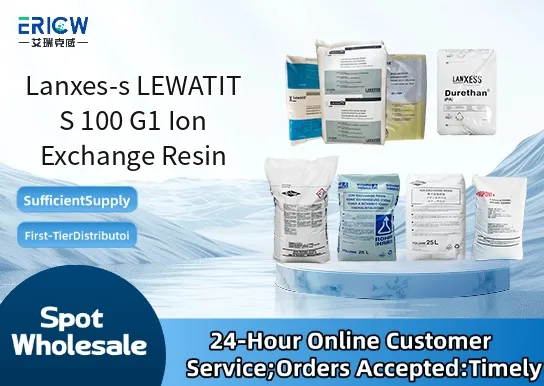
Highly stable macroporous polystyrene-divinylbenzene matrix ensures excellent mechanical strength and long service life under cyclic loading.
Uniform spherical bead morphology (0.4–1.2 mm) enables low pressure drop and consistent hydraulic performance in fixed-bed systems.
Optimized sulfonic acid functionalization delivers high total exchange capacity and rapid kinetics for monovalent cations.
Exceptional chemical resistance to oxidants, acids, and moderate concentrations of alkalis supports reliable operation in demanding pretreatment and polishing applications.
Low extractables profile meets stringent regulatory requirements for pharmaceutical and ultrapure water production.
Ultrapure water (UPW) generation for semiconductor manufacturing and microelectronics fabrication.
Pharmaceutical-grade water purification (PW, WFI) in compliance with USP/EP/JP pharmacopoeial standards.
Pre-treatment of feedwater for reverse osmosis and electrodeionization (EDI) systems.
Cation removal in power plant boiler feedwater conditioning and cycle chemistry control.
Softening and dealkalization in industrial process water systems requiring low sodium leakage.
| Chemical Type | Sulfonated macroporous strong acid cation exchanger |
| Product Form | Moist, hydrogen-form beads |
| Appearance | Opaque amber spherical beads |
| Particle Size Range | 0.4–1.2 mm (95% retained on 0.315 mm sieve) |
| Moisture Content | 48–55% (w/w) |
| Total Exchange Capacity (H⁺ form) | ≥ 1.8 eq/L (dry base) |
| Uniformity Coefficient | ≤ 1.6 |
| Maximum Operating Temperature | 120 °C |
Q1: What is the primary functional group and ion exchange capacity of LEWATIT S 100 G1?
A: LEWATIT S 100 G1 is a strongly acidic cation exchange resin based on sulfonated polystyrene-divinylbenzene matrix. It exhibits high selectivity for multivalent cations and typical total exchange capacity ranges from 1.8 to 2.2 mmol/g (dry), depending on operating conditions and regeneration efficiency.
Q2: Is LEWATIT S 100 G1 suitable for food-grade or pharmaceutical water purification applications?
A: Yes — this resin is commonly used in high-purity water systems for pharmaceutical, biotech, and food & beverage industries. It complies with relevant global regulatory expectations for indirect food contact when operated within validated process parameters and regenerated using approved agents (e.g., food-grade acid and alkali).
Q3: How does temperature affect the performance and stability of LEWATIT S 100 G1?
A: The resin maintains stable mechanical and chemical performance up to approximately 120 °C in short-term operation, though continuous use above 100 °C may accelerate physical degradation. Optimal ion exchange kinetics and column efficiency are typically achieved between 10 °C and 50 °C.
Q4: Can LEWATIT S 100 G1 be regenerated in situ, and what are common regenerants?
A: Yes — it is fully regenerable in fixed-bed or moving-bed configurations. Standard regeneration employs aqueous solutions of mineral acids such as hydrochloric or sulfuric acid, with concentration and flow rate adjusted according to feed water composition and desired effluent quality.
Contact With Us:
E-mail: wangxingqiang@ericwchem.com
Have a Questions? Call Us:
Add:
Building A1, Jiete Industrial Park, Huangpu District, Guangzhou City, Guangdong Province, China