English
 Español
 tiếng việt
 русский
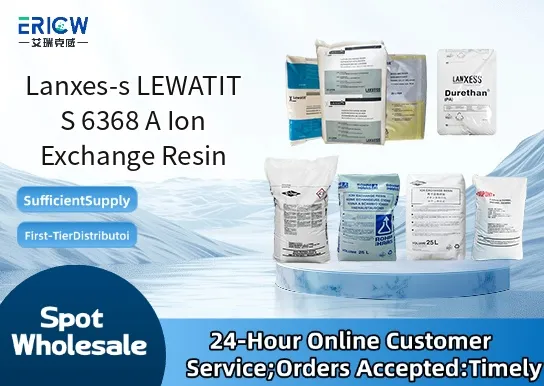
Highly selective for multivalent cations including Ca²⁺, Mg²⁺, and heavy metal ions.
Optimized macroporous polystyrene matrix ensures excellent kinetic performance and fouling resistance.
Superior chemical and thermal stability in acidic, alkaline, and oxidizing environments.
Consistent spherical bead morphology with narrow particle size distribution for uniform hydraulic flow.
Low osmotic swelling behavior enables stable operation across wide pH and ionic strength ranges.
Removal of hardness ions and trace heavy metals from industrial process water.
Purification of pharmaceutical-grade water (PW/WFI pre-treatment).
Recovery and concentration of valuable metal ions in hydrometallurgical leachates.
Softening and polishing of boiler feedwater in high-pressure steam generation systems.
Pre-treatment for reverse osmosis and electrodeionization units to protect downstream membranes.
| Chemical Type | Macroporous strong acid cation exchange resin (sulfonated polystyrene-divinylbenzene) |
| Product Form | Moist, sodium-form beads |
| Appearance | Opaque amber spherical beads |
| Functional Group | Sulfonic acid (–SO₃H) |
| Ion Exchange Capacity (min.) | 1.8 meq/mL (Na⁺ form) |
| Moisture Content | 45–50 % (w/w) |
| Particle Size Range | 0.4 – 0.9 mm |
| pH Stability Range | 0 – 14 |
Q1: What is the primary functional group and ionic form of LEWATIT S 6368 A?
A: LEWATIT S 6368 A is a strongly acidic cation exchange resin based on a styrene-divinylbenzene matrix, featuring sulfonic acid functional groups. It is supplied in the sodium (Na⁺) form, making it suitable for softening and selective cation removal applications.
Q2: Is this resin suitable for use in potable water treatment systems?
A: Yes — LEWATIT S 6368 A is commonly used in drinking water conditioning applications, including hardness reduction and heavy metal ion removal. It complies with general regulatory requirements for materials in contact with potable water when installed and operated according to manufacturer guidelines and local authority specifications.
Q3: How does LEWATIT S 6368 A differ from standard gel-type strong acid cation resins?
A: S 6368 A features a macroporous structure, offering enhanced physical stability, superior resistance to oxidation and osmotic shock, and improved performance in solutions containing suspended solids or organic contaminants compared to conventional gel-type resins.
Q4: What regeneration chemicals are recommended for this resin?
A: Sodium chloride (NaCl) brine is the standard regenerant for softening service. For full cation removal or hydrogen cycle operation, hydrochloric acid (HCl) may be used — however, acid regeneration requires careful system design to ensure material compatibility and proper rinsing protocols.
Q5: Can LEWATIT S 6368 A be used in high-temperature or high-flow-rate applications?
A: The resin is designed for continuous service up to 120 °C and demonstrates excellent hydraulic performance under elevated flow conditions due to its uniform bead size and robust macroporous morphology. Long-term thermal stability depends on feedwater quality and operational control of pH and oxidants.
Contact With Us:
E-mail: wangxingqiang@ericwchem.com
Have a Questions? Call Us:
Add:
Building A1, Jiete Industrial Park, Huangpu District, Guangzhou City, Guangdong Province, China