English
 Español
 tiếng việt
 русский
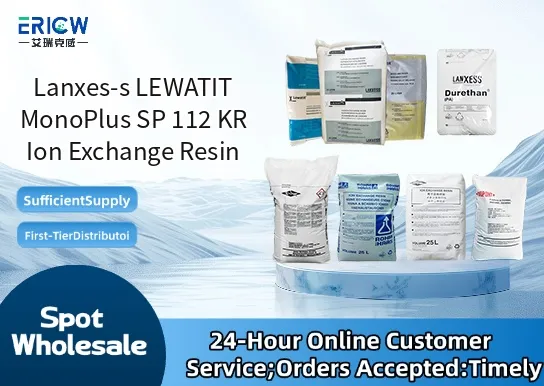
Highly selective for monovalent cations, especially sodium and potassium ions, enabling precise softening and polishing.
Exceptional chemical and osmotic stability, suitable for continuous operation in demanding industrial water treatment systems.
Optimized spherical bead morphology ensures low pressure drop and uniform flow distribution in fixed-bed columns.
Low total organic carbon (TOC) leaching profile, meeting stringent requirements for pharmaceutical and ultrapure water applications.
Regenerable with standard NaCl solutions, offering cost-effective long-term performance and reduced operational waste.
Final polishing of feedwater for high-pressure steam boilers in power generation plants.
Ultrapure water (UPW) production for semiconductor manufacturing and microelectronics fabrication.
Pharmaceutical-grade water purification complying with USP <843> and EP 2.2.12 standards.
Removal of trace alkali metals from process streams in fine chemical synthesis.
Pre-treatment for reverse osmosis (RO) and electrodeionization (EDI) systems to protect downstream membranes and modules.
| Chemical Type | Sulfonated polystyrene-divinylbenzene copolymer (strong acid cation exchanger) |
| Product Form | Moist, spherical beads in sodium form (Na⁺) |
| Appearance | Opaque amber to light brown uniform beads |
| Functional Group | Sulfonic acid (–SO₃H) |
| Ion Exchange Capacity (min.) | ≥ 1.9 eq/L (Na⁺ form, wet) |
| Moisture Content | 46 – 50 % (w/w) |
| Particle Size Range | 0.4 – 0.63 mm (95 % retained on 0.315 mm sieve) |
| Uniformity Coefficient (max.) | 1.6 |
Q1: What is the primary functional group and ionic form of LEWATIT MonoPlus SP 112 KR?
A: LEWATIT MonoPlus SP 112 KR is a strongly acidic cation exchange resin based on sulfonic acid functional groups, supplied in the potassium (K⁺) ionic form. It is designed for high selectivity toward multivalent cations in demanding water treatment and process applications.
Q2: How does SP 112 KR differ from standard gel-type strong acid cation resins?
A: SP 112 KR features a macroporous polystyrene matrix with uniform bead structure and enhanced physical stability, offering superior resistance to osmotic shock, fouling, and oxidation compared to conventional gel-type resins. Its optimized kinetics support efficient operation under variable flow rates and feedwater conditions.
Q3: Is this resin suitable for food-grade or pharmaceutical water purification?
A: Yes — LEWATIT MonoPlus SP 112 KR is manufactured and tested in accordance with relevant global regulatory expectations for ion exchange resins used in water purification for food and pharmaceutical applications. It meets stringent requirements for extractables and structural integrity, though final compliance depends on system validation and local regulatory review.
Q4: What regeneration chemicals and typical conditions are recommended?
A: Regeneration is typically performed using sodium chloride (NaCl) solution. Optimal concentration, contact time, and flow rate depend on service cycle performance and feedwater composition. Acid regeneration (e.g., HCl) may be used selectively for specific hardness removal or recovery scenarios, but requires careful system compatibility assessment.
Q5: Can SP 112 KR be used in mixed-bed configurations?
A: While SP 112 KR is primarily deployed in separate cation units, it can be integrated into mixed-bed systems when paired with compatible anion resins — provided physical and kinetic properties are balanced to avoid segregation and ensure uniform regeneration. Application-specific testing is strongly advised before full-scale implementation.
Contact With Us:
E-mail: wangxingqiang@ericwchem.com
Have a Questions? Call Us:
Add:
Building A1, Jiete Industrial Park, Huangpu District, Guangzhou City, Guangdong Province, China