English
 Español
 tiếng việt
 русский
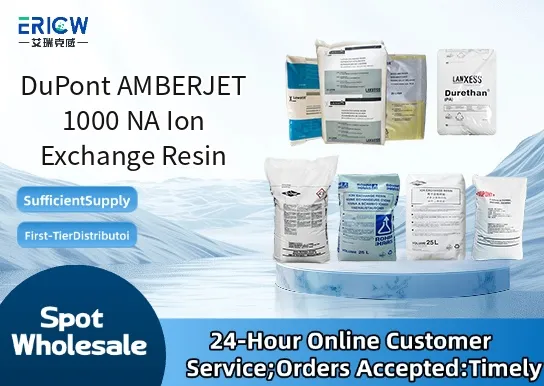
High-capacity, gel-type strong acid cation exchange resin in sodium form.
Engineered for superior kinetics and consistent performance in demanding service cycles.
Excellent physical and chemical stability with low attrition rate under normal operating conditions.
Optimized bead uniformity and narrow particle size distribution for low pressure drop and efficient bed utilization.
Complies with FDA 21 CFR §173.25 and NSF/ANSI Standard 61 for potable water applications.
Softening of municipal and industrial feedwater for boilers and cooling systems.
Pretreatment for reverse osmosis (RO) and deionization (DI) systems.
Removal of hardness ions (Ca²⁺, Mg²⁺) in pharmaceutical process water systems.
Food and beverage production where sodium-form cation exchange is required for consistent water quality.
Electronics-grade ultrapure water polishing in semiconductor manufacturing support loops.
| Chemical Type | Strong Acid Cation (SAC), Sulfonic Acid Functional Group |
| Product Form | Sodium Form (Na⁺) |
| Appearance | Moist, spherical, translucent amber beads |
| Functional Capacity (min., Na⁺ form) | 1.8 eq/L (dry) |
| Moisture Content | 45–50 % (as shipped) |
| Particle Size Range | 0.3–1.2 mm (95 % retained on 16–60 mesh screens) |
| Uniformity Coefficient (max.) | 1.7 |
| Maximum Total Organic Carbon (TOC) Leachables | < 1.0 ppm (per ASTM D5127) |
Q1: What is the primary function of AMBERJET 1000 NA in water treatment systems?
A: AMBERJET 1000 NA is a strong acid cation exchange resin in the sodium form, designed primarily for softening applications—removing calcium and magnesium ions from feed water to prevent scale formation in boilers, cooling towers, and downstream process equipment.
Q2: Can AMBERJET 1000 NA be used in mixed-bed deionization systems?
A: No—AMBERJET 1000 NA is a cation resin only and is not intended for use alone in mixed-bed configurations. It is typically deployed in separate cation columns upstream of anion resins or as part of dual-bed demineralization systems where full deionization is required.
Q3: How is AMBERJET 1000 NA regenerated after exhaustion?
A: The resin is regenerated using a concentrated sodium chloride (NaCl) brine solution. Regeneration restores the sodium form by displacing accumulated hardness ions (Ca²⁺, Mg²⁺) from the exchange sites, enabling repeated service cycles with consistent softening performance.
Q4: What are the recommended operating temperature and pH limits for this resin?
A: AMBERJET 1000 NA is suitable for continuous operation within a typical temperature range of 1–100 °C and functions effectively across a broad pH range (approximately 0–14), though long-term exposure to extreme pH or elevated temperatures may affect physical stability and cycle life.
Q5: Is AMBERJET 1000 NA compatible with chlorinated municipal water supplies?
A: While the resin can tolerate low levels of free chlorine encountered in typical potable water feeds, prolonged exposure to oxidants like chlorine may accelerate oxidative degradation. For chlorinated influents, pre-dechlorination or use of more oxidation-resistant resins is often recommended to maximize service life.
Contact With Us:
E-mail: wangxingqiang@ericwchem.com
Have a Questions? Call Us:
Add:
Building A1, Jiete Industrial Park, Huangpu District, Guangzhou City, Guangdong Province, China