English
 Español
 tiếng việt
 русский
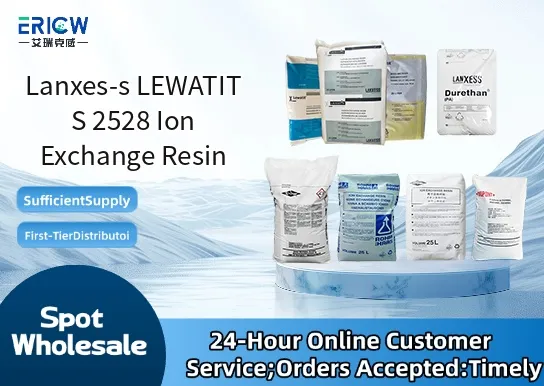
Highly selective for divalent cations such as Ca²⁺ and Mg²⁺ in softening applications.
Optimized bead uniformity and mechanical strength for stable hydraulic performance and extended service life.
Low osmotic fragility ensures consistent performance under frequent regeneration cycles.
Food-grade compliant formulation suitable for potable water treatment per FDA 21 CFR §173.25.
Fast kinetics and high exchange capacity enable compact system design and reduced footprint.
Potable water softening in municipal and residential drinking water systems.
Pre-treatment for reverse osmosis (RO) and nanofiltration (NF) membrane systems.
Industrial boiler feedwater conditioning to prevent scale formation.
Food and beverage processing where low sodium leakage and regulatory compliance are critical.
Hospital and pharmaceutical purified water (PW) loop polishing.
| Chemical Type | Strong acid cation exchanger, sulfonated polystyrene-divinylbenzene copolymer |
| Product Form | Na⁺ form (ready-to-use) |
| Appearance | Uniform spherical amber beads |
| Primary Applications | Water softening, demineralization pre-treatment, food-grade water conditioning |
| Key Features | High selectivity for Ca²⁺/Mg²⁺, low sodium leakage, FDA-compliant, high physical stability |
| Benefits | Reduced regenerant consumption, longer cycle runs, minimal pressure drop, compliance with drinking water standards |
| Functional Group | Sulfonic acid (–SO₃H) |
| Ion Exchange Capacity (min.) | 1.9 eq/L (Na⁺ form, dry basis) |
Q1: What is the primary functional group and ionic form of LEWATIT S 2528?
A: LEWATIT S 2528 is a strongly acidic cation exchange resin based on a styrene-divinylbenzene matrix, functionalized with sulfonic acid groups. It is supplied in the sodium (Na⁺) form, making it suitable for softening and selective cation removal applications.
Q2: Can LEWATIT S 2528 be used in food-grade or pharmaceutical water treatment systems?
A: Yes — LEWATIT S 2528 is manufactured and tested to meet requirements for use in potable water and process water applications. It complies with relevant global regulatory frameworks for indirect food contact, subject to proper regeneration and operational validation per end-use specifications.
Q3: How does LEWATIT S 2528 compare to gel-type resins in terms of kinetics and fouling resistance?
A: As a macroporous resin, LEWATIT S 2528 offers enhanced kinetic performance and improved resistance to organic fouling compared to conventional gel-type cation exchangers. Its porous structure facilitates faster ion diffusion and maintains capacity more effectively in challenging feedwaters containing suspended solids or natural organic matter.
Q4: What regeneration chemicals and typical conditions are recommended for LEWATIT S 2528?
A: Sodium chloride (NaCl) is the standard regenerant for softening service. For full cation exchange recovery, acid regeneration (e.g., HCl or H₂SO₄) may be applied depending on the target ions and system design. Regeneration efficiency depends on dosage, flow rate, contact time, and temperature — best practices should follow site-specific pilot testing and manufacturer guidelines.
Contact With Us:
E-mail: wangxingqiang@ericwchem.com
Have a Questions? Call Us:
Add:
Building A1, Jiete Industrial Park, Huangpu District, Guangzhou City, Guangdong Province, China