English
 Español
 tiếng việt
 русский
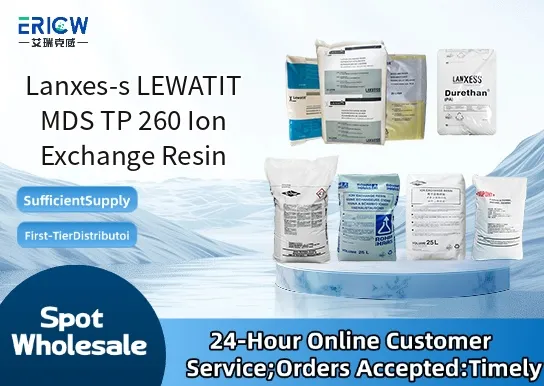
Highly stable macroporous acrylic matrix designed for demanding industrial water treatment conditions.
Optimized for selective removal of multivalent cations including calcium, magnesium, and heavy metals.
Excellent chemical resistance to oxidants, acids, and alkalis across broad pH range (1–14).
Low osmotic swelling behavior ensures consistent hydraulic performance and extended service life.
Uniform spherical bead morphology with narrow particle size distribution for low pressure drop and high flow capacity.
Ultrapure water production for semiconductor manufacturing and pharmaceutical processes.
Pre-treatment polishing in power plant boiler feedwater systems.
Removal of trace heavy metals from process effluents in electroplating and metal finishing industries.
Softening and demineralization in high-purity industrial steam generation systems.
Cation exchange polishing step in biotechnology downstream purification trains.
| Chemical Type | Macroporous acrylic weak acid cation exchanger |
| Product Form | Moist, spherical beads |
| Appearance | Opaque white to off-white beads |
| Functional Group | Carboxylic acid (–CH₂COOH) |
| Ion Form | Hydrogen form (H⁺) |
| Moisture Content | Approx. 48–52% (w/w) |
| Particle Size Range | 0.315–1.25 mm |
| Uniformity Coefficient | ≤ 1.6 |
Q1: What is the primary functional group and matrix type of LEWATIT MDS TP 260?
A: LEWATIT MDS TP 260 is a macroporous, strongly acidic cation exchange resin based on a styrene-divinylbenzene copolymer matrix, functionalized with sulfonic acid groups. Its macroporous structure provides enhanced kinetic performance and stability in non-aqueous or low-ionic-strength environments.
Q2: In which types of industrial processes is this resin most commonly applied?
A: It is widely used for selective removal of multivalent cations (e.g., Ca²⁺, Mg²⁺, Fe³⁺, Cu²⁺) in demanding applications such as pharmaceutical water polishing, fine chemical synthesis, catalyst recovery, and purification of organic process streams where gel-type resins may exhibit limited capacity or fouling resistance.
Q3: How does LEWATIT MDS TP 260 differ from conventional gel-type cation exchangers?
A: Unlike gel-type resins, MDS TP 260 features a rigid, permanently porous structure that maintains high exchange capacity and mechanical stability across varying pH, temperature, and solvent compositions—including mixed aqueous-organic media. This makes it especially suitable for applications involving intermittent flow, high solids content, or aggressive regeneration conditions.
Q4: What are key handling and storage recommendations?
A: Store in original sealed packaging at temperatures between 5 °C and 40 °C, away from direct sunlight and oxidizing agents. Avoid freezing. Prior to use, rinse thoroughly with deionized water or appropriate pre-treatment solution to remove fines and residual manufacturing agents. Always follow site-specific safety protocols when handling dry or spent resin.
Contact With Us:
E-mail: wangxingqiang@ericwchem.com
Have a Questions? Call Us:
Add:
Building A1, Jiete Industrial Park, Huangpu District, Guangzhou City, Guangdong Province, China