English
 Español
 tiếng việt
 русский
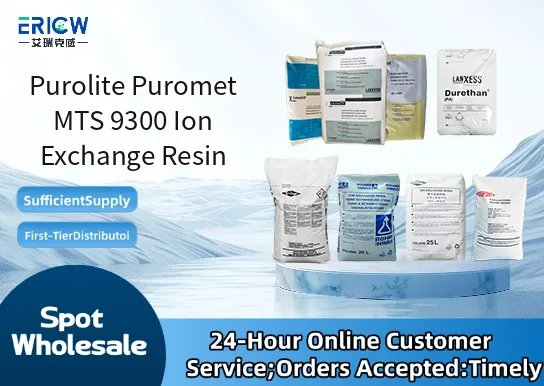
Highly selective chelating resin specifically engineered for the removal of heavy metal cations (e.g., Cu²⁺, Ni²⁺, Zn²⁺, Cd²⁺, Pb²⁺) from low-concentration industrial effluents.
Stable iminodiacetate functional group grafted onto a macroporous polystyrene-divinylbenzene matrix, ensuring excellent chemical and physical durability across wide pH and oxidative conditions.
Superior kinetic performance and high total capacity (>2.0 eq/L in Na⁺ form) with strong affinity even at trace metal concentrations (<1 ppm) and in the presence of competing calcium and magnesium ions.
Low pressure drop and high bed stability due to uniform spherical bead morphology (0.3–1.2 mm particle size) and high mechanical strength, minimizing attrition during hydraulic cycling.
Regenerable with dilute acid (e.g., 5% H₂SO₄ or HCl), enabling cost-effective closed-loop operation and minimal waste generation.
Electroplating and metal finishing wastewater treatment for compliance with stringent discharge limits on heavy metals.
Leachate polishing in mining and hydrometallurgical operations to recover valuable metals and meet environmental regulations.
Electronic manufacturing wastewater treatment, particularly for copper removal from etching and cleaning rinse streams.
Pharmaceutical and fine chemical process water purification where ultra-low heavy metal contamination is critical.
Pre-treatment of feedwater for reverse osmosis systems to prevent heavy metal fouling of membranes.
| Chemical Type | Chelating resin with iminodiacetate functional groups |
| Product Form | Moist, spherical beads |
| Appearance | Light tan to amber, uniform beads |
| Matrix Structure | Macroporous polystyrene-divinylbenzene copolymer |
| Functional Group | Iminodiacetic acid (IDA) |
| Ion Form (as shipped) | Sodium (Na⁺) |
| Particle Size Range | 0.3 – 1.2 mm |
| Moisture Content | 45 – 55% (w/w) |
Q1: What is the primary application of Puromet MTS 9300 in industrial water treatment?
A: Puromet MTS 9300 is a high-capacity, macroporous chelating resin specifically engineered for selective removal of heavy metals—including nickel, copper, cobalt, and zinc—from acidic process streams, rinse waters, and leachates in metal finishing, mining, and electroplating applications.
Q2: How does Puromet MTS 9300 differ from standard strong acid cation resins?
A: Unlike conventional strong acid cation resins, MTS 9300 features iminodiacetic functional groups grafted onto a robust macroporous polystyrene-divinylbenzene matrix—enabling superior selectivity for transition metals over calcium or magnesium, even in low-pH and high-salinity environments where competing ions are abundant.
Q3: Can Puromet MTS 9300 be regenerated, and what regeneration agents are typically used?
A: Yes, Puromet MTS 9300 is fully regenerable using dilute mineral acids (e.g., hydrochloric or sulfuric acid) or complexing agents such as sodium salt solutions, depending on the target metal and recovery objectives. Regeneration efficiency and cycle life depend on feedwater composition and operational controls.
Q4: Is Puromet MTS 9300 suitable for use in food-grade or pharmaceutical water systems?
A: Puromet MTS 9300 is not certified for direct contact with food or pharmaceutical process streams requiring regulatory compliance for human consumption. It is intended for industrial wastewater polishing and resource recovery—not for potable water or GMP-critical purification.
Contact With Us:
E-mail: wangxingqiang@ericwchem.com
Have a Questions? Call Us:
Add:
Building A1, Jiete Industrial Park, Huangpu District, Guangzhou City, Guangdong Province, China