English
 Español
 tiếng việt
 русский
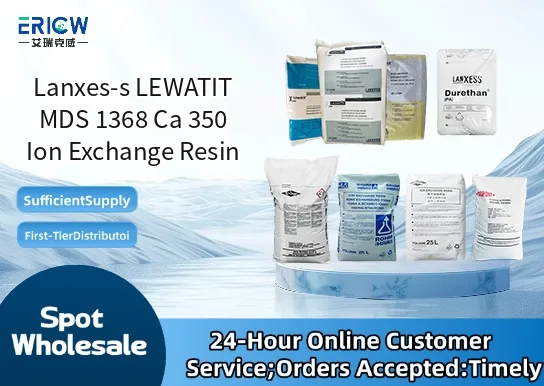
High-capacity calcium-selective chelating resin with optimized macroporous matrix for superior kinetics and fouling resistance.
Exceptional chemical and thermal stability in acidic, alkaline, and oxidizing environments up to 80 °C.
Low operating pressure drop and high mechanical strength, ensuring long service life in fixed-bed and moving-bed systems.
Consistent particle size distribution (0.45–1.25 mm) for uniform flow dynamics and minimized channeling.
Regenerable with dilute mineral acids or calcium chloride solutions, enabling cost-effective cyclic operation.
Removal of heavy metals (e.g., Ni²⁺, Cu²⁺, Zn²⁺, Cd²⁺) from industrial wastewater streams.
Calcium and magnesium softening in pre-treatment for reverse osmosis and boiler feedwater systems.
Recovery and concentration of valuable metal ions in hydrometallurgical leachate purification.
Polishing of process water in pharmaceutical and electronics manufacturing where ultra-low ionic contamination is required.
Selective separation of transition metals in catalyst regeneration and battery recycling effluents.
| Chemical Type | Macroporous chelating resin with iminodiacetic acid functional groups |
| Product Form | Moist, spherical beads |
| Appearance | Off-white to light yellow, uniform granular particles |
| Functional Group | Iminodiacetic acid (IDA) |
| Ion Form | Calcium (Ca²⁺) form as supplied |
| Particle Size Range | 0.45 – 1.25 mm |
| Moisture Content | Approx. 48 – 52 % (w/w) |
| pH Stability Range | 1 – 14 (short-term exposure); recommended operating range: 2 – 12 |
Q1: What is the primary functional form of LEWATIT MDS 1368 Ca 350?
A: LEWATIT MDS 1368 Ca 350 is supplied in the calcium (Ca²⁺) form, optimized for selective removal of multivalent cations such as heavy metals, iron, and manganese from aqueous streams in industrial water treatment and process purification applications.
Q2: Is this resin suitable for food-grade or pharmaceutical water polishing?
A: While LEWATIT MDS 1368 Ca 350 is designed for high-purity water applications and complies with general regulatory requirements for ion exchange resins used in water treatment, formal food-contact or pharmaceutical-grade certification must be verified per batch documentation and local regulatory authority guidelines.
Q3: How does the macroporous structure benefit performance in challenging feed waters?
A: Its macroporous matrix provides enhanced mechanical stability and resistance to fouling, allowing effective operation in waters with moderate organic content, suspended solids, or variable pH—without significant loss of capacity or pressure drop under typical service conditions.
Q4: Can this resin be regenerated, and what are common regeneration agents?
A: Yes, LEWATIT MDS 1368 Ca 350 is fully regenerable using standard acidic solutions such as hydrochloric acid (HCl) or sulfuric acid (H₂SO₄), enabling repeated use in fixed-bed or moving-bed ion exchange systems with consistent performance recovery.
Contact With Us:
E-mail: wangxingqiang@ericwchem.com
Have a Questions? Call Us:
Add:
Building A1, Jiete Industrial Park, Huangpu District, Guangzhou City, Guangdong Province, China