English
 Español
 tiếng việt
 русский
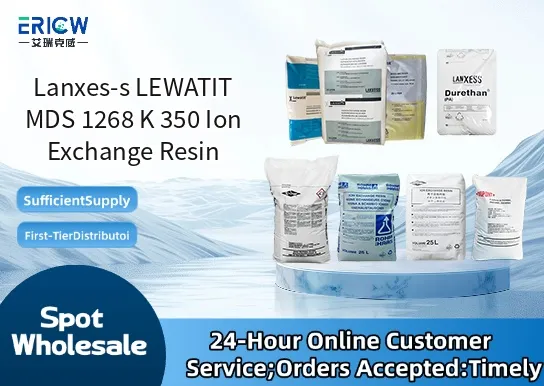
Highly selective for divalent cations including Ca²⁺, Mg²⁺, and heavy metals in complex aqueous matrices.
Optimized macroporous polystyrene-divinylbenzene matrix ensures excellent kinetic performance and resistance to fouling.
Functionalized with sulfonic acid groups, providing strong-acid cation exchange capacity and stable operation across pH 0–14.
Uniform spherical bead morphology (0.3–1.2 mm) enables low pressure drop and consistent hydraulic performance in packed-bed systems.
Regenerable with standard NaCl or HCl solutions, supporting sustainable cyclic operation in industrial water treatment processes.
Ultrapure water production for semiconductor manufacturing and pharmaceutical water systems.
Removal of hardness ions and trace heavy metals from industrial process feedwater.
Pre-treatment polishing step in high-pressure boiler feedwater circuits.
Recovery and separation of valuable metal ions (e.g., Ni²⁺, Co²⁺, Cu²⁺) in hydrometallurgical leachate streams.
Decationization in laboratory and pilot-scale deionization units requiring high reliability and reproducibility.
| Chemical Type | Strong-acid cation exchange resin, sulfonated macroporous polystyrene-divinylbenzene |
| Product Form | Moist, spherical beads |
| Appearance | Off-white to light amber, free-flowing granular solid |
| Functional Group | Sulfonic acid (–SO₃H) |
| Particle Size Range | 0.3 – 1.2 mm |
| Moisture Content (as shipped) | 45 – 50 % (w/w) |
| Total Exchange Capacity (dry basis) | ≥ 4.8 mmol/g |
| pH Stability Range | 0 – 14 |
Q1: What is the primary functional group and ionic form of LEWATIT MDS 1268 K 350?
A: LEWATIT MDS 1268 K 350 is a strongly acidic cation exchange resin in the potassium (K⁺) form, based on a sulfonated polystyrene-divinylbenzene matrix. Its high selectivity for multivalent cations makes it especially suitable for softening and heavy metal removal applications.
Q2: Is this resin suitable for potable water treatment?
A: Yes — LEWATIT MDS 1268 K 350 is manufactured and tested to meet general requirements for use in drinking water systems, including compliance with relevant material safety and leachability guidelines for ion exchange resins. End-use validation under local regulatory frameworks remains the responsibility of the system operator.
Q3: How does MDS 1268 K 350 differ from standard sodium-form strong acid cation resins?
A: Unlike conventional Na⁺-form resins optimized for hardness removal via Na⁺/Ca²⁺ exchange, the potassium form offers reduced sodium breakthrough and improved selectivity for divalent and trivalent cations — particularly beneficial in applications where sodium addition must be minimized or where preferential removal of metals like copper, nickel, or lead is required.
Q4: What are the recommended storage conditions for long-term stability?
A: Store in original sealed packaging at temperatures between 5 °C and 30 °C, away from direct sunlight and oxidizing agents. Avoid freezing, as ice formation may damage the bead structure. Once hydrated, maintain in a moist environment to prevent desiccation-induced cracking.
Contact With Us:
E-mail: wangxingqiang@ericwchem.com
Have a Questions? Call Us:
Add:
Building A1, Jiete Industrial Park, Huangpu District, Guangzhou City, Guangdong Province, China