English
 Español
 tiếng việt
 русский
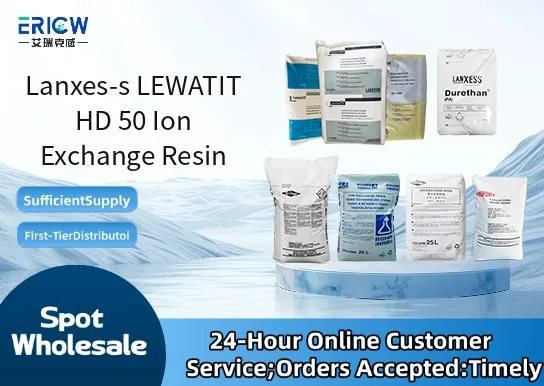
High-capacity, macroporous strong acid cation exchange resin based on sulfonated polystyrene-divinylbenzene matrix.
Exceptional physical and chemical stability across wide pH (0–14) and temperature ranges (up to 120 °C).
Optimized for high-efficiency removal of multivalent cations including Ca²⁺, Mg²⁺, Fe³⁺, and heavy metals.
Low pressure drop and excellent hydraulic performance in both fixed-bed and moving-bed configurations.
Consistent batch-to-batch reproducibility and ISO 9001-certified manufacturing process.
Ultrapure water production for semiconductor and pharmaceutical manufacturing.
Pre-treatment and polishing in power plant boiler feedwater systems.
Heavy metal recovery and wastewater treatment in electroplating and metal finishing industries.
Decalcification and hardness removal in industrial process water circuits.
Regenerable softening unit in food & beverage processing and dairy applications.
| Chemical Type | Strong acid cation exchanger (sulfonic acid group) |
| Product Form | Moist, spherical beads |
| Appearance | Amber to light brown, uniform spherical particles |
| Matrix Structure | Macroporous polystyrene-divinylbenzene copolymer |
| Functional Group | –SO₃H (sulfonic acid) |
| Ion Form | H⁺ form (ready for use after standard regeneration) |
| Primary Applications | Water softening, demineralization, heavy metal removal, ultrapure water polishing |
| Key Features | High total exchange capacity, excellent osmotic stability, low fines generation |
Q1: What is the primary functional group and matrix type of Lanxes-s LEWATIT HD 50?
A: Lanxes-s LEWATIT HD 50 is a strongly acidic cation exchange resin based on a macroporous polystyrene-divinylbenzene matrix, functionalized with sulfonic acid groups. Its macroporous structure provides enhanced stability under varying pH and oxidative conditions, making it suitable for demanding industrial water treatment applications.
Q2: In which types of water treatment processes is this resin typically deployed?
A: This resin is commonly used in demineralization systems, condensate polishing, and high-purity water production—especially where feedwater contains suspended solids, organic fouling potential, or fluctuating ionic loads. Its robust physical structure supports reliable performance in both co-current and counter-current regeneration modes.
Q3: How does Lanxes-s LEWATIT HD 50 compare to gel-type cation resins in terms of chemical and thermal stability?
A: Due to its macroporous architecture and crosslinked backbone, Lanxes-s LEWATIT HD 50 offers superior resistance to oxidation, osmotic shock, and elevated temperatures compared to conventional gel-type resins. It maintains consistent capacity and pressure drop characteristics even after repeated cycles in aggressive environments.
Q4: What are key handling and storage recommendations prior to use?
A: The resin should be stored in its supplied moist condition, protected from freezing, direct sunlight, and contamination. Prior to service, it requires thorough backwashing and acid regeneration to remove manufacturing residues and ensure full ionic form conversion. Avoid prolonged exposure to deionized water without proper conditioning.
Contact With Us:
E-mail: wangxingqiang@ericwchem.com
Have a Questions? Call Us:
Add:
Building A1, Jiete Industrial Park, Huangpu District, Guangzhou City, Guangdong Province, China