English
 Español
 tiếng việt
 русский
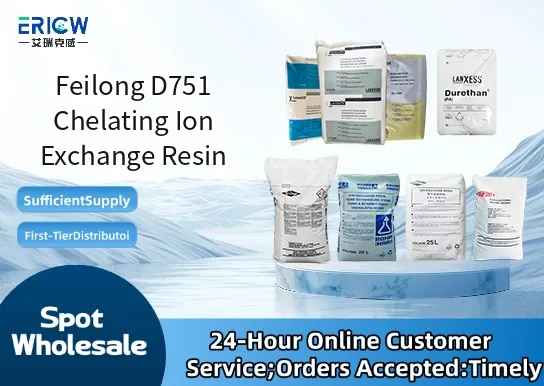
Highly selective for heavy metal cations including Cu²⁺, Ni²⁺, Co²⁺, and Zn²⁺ under low-concentration and neutral-to-alkaline pH conditions.
Exceptional chemical stability in acidic and oxidative environments, enabling robust performance in aggressive process streams.
Functionalized with iminodiacetate chelating groups grafted onto a macroporous polystyrene-divinylbenzene matrix.
Low pressure drop and high hydraulic capacity due to uniform spherical bead morphology and optimized particle size distribution (0.3–1.2 mm).
Regenerable with dilute acid (e.g., 5% HCl or H₂SO₄) without significant loss of capacity or structural integrity over multiple cycles.
Recovery of valuable metals from electroplating rinse waters and PCB manufacturing effluents.
Purification of nickel and cobalt solutions in hydrometallurgical leachate processing.
Removal of trace heavy metals from pharmaceutical-grade water and ultrapure process streams.
Treatment of mining drainage and acid mine drainage (AMD) to meet stringent discharge limits.
Separation and concentration of transition metals in catalyst recycling and battery black mass leaching solutions.
| Chemical Type | Iminodiacetate-functionalized chelating resin |
| Product Form | Moist, spherical beads |
| Appearance | Light yellow to amber, free-flowing granules |
| Matrix Structure | Macroporous polystyrene-divinylbenzene copolymer |
| Particle Size Range | 0.3 – 1.2 mm |
| Moisture Content | 45 – 55% (as shipped) |
| Ion Exchange Capacity (H⁺ form) | ≥ 2.0 meq/mL (wet volume) |
| pH Stability Range | 1 – 12 (short-term exposure up to pH 13) |
Q1: What types of metal ions does Feilong D751 effectively bind in aqueous systems?
A: Feilong D751 is specifically designed to chelate transition metal ions such as copper, nickel, cobalt, zinc, and iron under neutral to mildly acidic conditions. Its iminodiacetate functional groups provide strong selectivity for these divalent cations, making it especially suitable for purification, catalyst recovery, and metal ion control in process streams.
Q2: How does Feilong D751 differ from standard strong acid cation exchange resins?
A: Unlike conventional sulfonated polystyrene resins, Feilong D751 features chelating functionality with pH-dependent binding capacity—exhibiting low affinity at very low pH but significantly enhanced selectivity and stability above pH 3–4. This enables targeted metal removal without excessive sodium or calcium interference, and allows for efficient regeneration using mild acid solutions.
Q3: Can Feilong D751 be used in food-grade or pharmaceutical water treatment applications?
A: Feilong D751 is manufactured under controlled conditions suitable for industrial water purification and specialty chemical processing. While it is not pre-certified for direct food contact or parenteral pharmaceutical use, it may be deployed in non-contact support systems (e.g., pretreatment of process water) where validated cleaning and leachate testing are performed per application-specific regulatory requirements.
Q4: What is the typical operating temperature range and chemical stability profile?
A: Feilong D751 demonstrates reliable performance within a standard operating range of 5 °C to 60 °C. It maintains structural integrity in dilute mineral acids and alkalis used during regeneration cycles, though prolonged exposure to oxidizing agents (e.g., chlorine, hydrogen peroxide) or highly concentrated caustic solutions above pH 12 should be avoided to preserve functional group stability.
Contact With Us:
E-mail: wangxingqiang@ericwchem.com
Have a Questions? Call Us:
Add:
Building A1, Jiete Industrial Park, Huangpu District, Guangzhou City, Guangdong Province, China