English
 Español
 tiếng việt
 русский
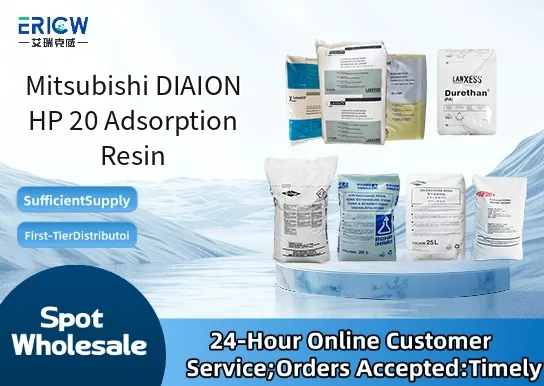
Macroporous polystyrene-divinylbenzene (PS-DVB) matrix with high surface area and uniform pore structure.
Optimized for selective adsorption of medium-to-large molecular weight organic compounds from aqueous solutions.
Excellent chemical and mechanical stability across wide pH range (1–14) and in organic solvent environments.
Low extractables and high regeneration efficiency, supporting multiple adsorption-desorption cycles without performance loss.
Non-ionic hydrophobic character enables effective removal of aromatic, heterocyclic, and aliphatic organics.
Purification of pharmaceutical intermediates and active pharmaceutical ingredients (APIs).
Removal of residual solvents, color bodies, and degradation by-products in fine chemical synthesis.
Concentration and recovery of natural product extracts (e.g., flavonoids, alkaloids, terpenes) from fermentation or plant leachates.
Wastewater treatment for industrial effluents containing refractory organic pollutants (e.g., phenols, nitroaromatics, pesticides).
Preparative chromatography and process-scale separation in biotechnology and nutraceutical manufacturing.
| Chemical Type | Macroporous non-ionic polystyrene-divinylbenzene copolymer |
| Product Form | Moist spherical beads |
| Appearance | Off-white to light beige, free-flowing granules |
| Mean Particle Size | 0.3–1.2 mm (standard grade) |
| Specific Surface Area | ~600–750 m²/g (BET method) |
| Mean Pore Diameter | ~15–25 nm |
| Water Content | 45–55% (as shipped) |
| pH Stability Range | 1–14 (continuous use) |
Q1: What is the primary functional mechanism of DIAION HP 20?
A: DIAION HP 20 is a macroporous, non-ionic adsorption resin based on styrene–divinylbenzene copolymer. Its high surface area and well-developed pore structure enable selective physical adsorption of organic compounds—particularly medium-to-low polarity molecules—via hydrophobic interactions and van der Waals forces.
Q2: Is DIAION HP 20 suitable for pharmaceutical or nutraceutical purification processes?
A: Yes—DIAION HP 20 is widely used in the purification of natural extracts, active pharmaceutical ingredients (APIs), and functional food components due to its chemical stability across broad pH ranges, low extractables profile, and compatibility with common solvents including water, alcohols, and acetone. It meets general industry expectations for GMP-aligned downstream processing.
Q3: How is DIAION HP 20 typically regenerated after saturation?
A: Regeneration is commonly achieved using polar organic solvents such as methanol, ethanol, or acetone—often followed by water rinsing. The choice and sequence of eluents depend on the adsorbed compound’s polarity and matrix complexity. Thermal regeneration is not recommended, as the resin is designed for solvent-based recovery under ambient or mildly elevated temperatures.
Q4: Can DIAION HP 20 be used in continuous chromatographic systems?
A: Yes—it is compatible with fixed-bed columns, simulated moving bed (SMB), and other continuous separation platforms. Its uniform spherical morphology, mechanical strength, and low pressure drop characteristics support stable long-term operation in both laboratory-scale and industrial-scale chromatographic configurations.
Contact With Us:
E-mail: wangxingqiang@ericwchem.com
Have a Questions? Call Us:
Add:
Building A1, Jiete Industrial Park, Huangpu District, Guangzhou City, Guangdong Province, China