English
 Español
 tiếng việt
 русский
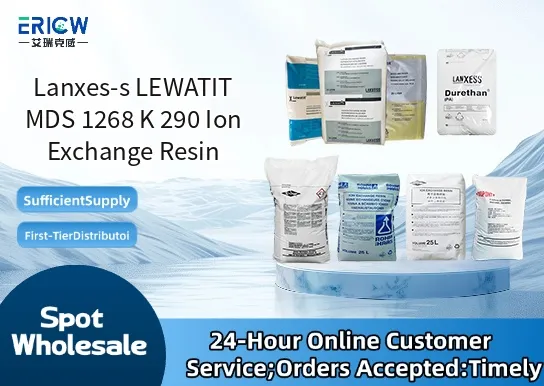
Highly selective for divalent cations including Ca²⁺, Mg²⁺, and heavy metals in complex aqueous matrices.
Optimized macroporous structure providing excellent kinetic performance and resistance to fouling from organic matter.
Stable under repeated regeneration cycles with strong acid (e.g., HCl or H₂SO₄), ensuring long service life.
Low osmotic swelling behavior, maintaining consistent bed volume and hydraulic performance across pH 1–14.
Sulfonic acid functional groups grafted onto a styrene-divinylbenzene copolymer backbone for robust chemical and thermal stability.
Pre-treatment polishing in high-purity water systems for pharmaceutical and biotechnology manufacturing.
Removal of hardness and trace metal ions from industrial process streams in power plant boiler feedwater circuits.
Recovery and concentration of valuable metal ions (e.g., Ni²⁺, Co²⁺, Cu²⁺) in hydrometallurgical leach solutions.
Decolorization and impurity removal in sugar refining and organic acid purification processes.
Effluent treatment for compliance with stringent discharge limits on heavy metals in electroplating and metal finishing wastewater.
| Chemical Type | Sulfonated macroporous polystyrene-based cation exchanger |
| Product Form | Moist, spherical beads |
| Appearance | Amber to light brown opaque beads |
| Functional Group | Sulfonic acid (–SO₃H) |
| Matrix Structure | Macroporous styrene-divinylbenzene copolymer |
| Ion Form | Hydrogen form (H⁺) |
| pH Stability Range | 1–14 |
| Maximum Operating Temperature | 120 °C |
Q1: What is the primary functional group and base matrix of LEWATIT MDS 1268 K 290?
A: LEWATIT MDS 1268 K 290 is a macroporous, strongly acidic cation exchange resin based on a styrene-divinylbenzene copolymer matrix, functionalized with sulfonic acid groups. Its macroporous structure provides enhanced kinetic performance and stability in non-aqueous or high-viscosity media.
Q2: In which types of industrial processes is this resin most commonly applied?
A: This resin is widely used for selective removal of multivalent metal ions (e.g., Ca²⁺, Mg²⁺, Fe³⁺, Cu²⁺) from organic solvents, process streams with low water content, and specialty chemical synthesis intermediates—particularly where gel-type resins exhibit limited capacity or slow kinetics.
Q3: Can LEWATIT MDS 1268 K 290 be regenerated, and what are typical regeneration conditions?
A: Yes, it is fully regenerable using standard strong mineral acids such as hydrochloric or sulfuric acid. Regeneration efficiency depends on operating conditions—including flow rate, temperature, and contaminant load—but generally achieves high recovery of exchange capacity after appropriate acid rinse and water displacement steps.
Q4: How does its macroporous structure benefit performance compared to gel-type resins?
A: The macroporous architecture ensures consistent porosity and accessibility of active sites even in low-polarity solvents or viscous solutions, minimizing diffusion limitations and supporting reliable operation across variable feed compositions and temperatures—without swelling-related mechanical stress.
Contact With Us:
E-mail: wangxingqiang@ericwchem.com
Have a Questions? Call Us:
Add:
Building A1, Jiete Industrial Park, Huangpu District, Guangzhou City, Guangdong Province, China