English
 Español
 tiếng việt
 русский
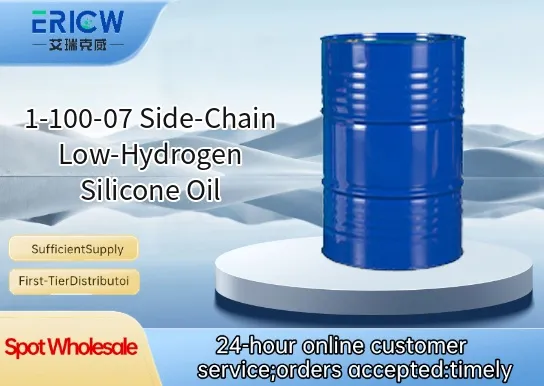
Exceptionally low residual hydrogen content ensures superior thermal and oxidative stability.
Side-chain molecular architecture delivers outstanding lubricity and surface slip without migration or blooming.
High compatibility with organic polymers, silicones, and common industrial solvents enables broad formulation flexibility.
Low volatility and non-yellowing characteristics support long-term performance in high-temperature processing environments.
Hydrophobic yet non-silicone-repellent surface behavior enhances water resistance while maintaining adhesion to substrates.
Release agent for high-precision rubber and silicone molding (e.g., medical tubing, gaskets).
Surface modifier in high-performance coatings for automotive clearcoats and industrial finishes.
Lubricant additive in specialty plastic processing, including LSR (liquid silicone rubber) injection molding.
Anti-blocking and slip agent in BOPP, PET, and PE film production.
Key component in textile softeners requiring durable hydrophobicity and wash-fastness.
| Chemical Type | Side-chain substituted polydimethylsiloxane with controlled Si–H functionality |
| Product Form | Clear, colorless to pale yellow liquid |
| Appearance | Homogeneous, low-viscosity fluid at 25°C |
| Primary Applications | Release agents, surface modifiers, lubricant additives, anti-blocking agents |
| Key Features | Low hydrogen content, side-chain architecture, high thermal stability, excellent compatibility |
| Benefits | Reduced post-cure discoloration, enhanced substrate adhesion, minimal volatility, consistent batch-to-batch performance |
| Storage Conditions | Store in sealed containers at 5–30°C; protect from moisture and direct sunlight |
| Shelf Life | 24 months from date of manufacture under recommended storage conditions |
Q1: What distinguishes 1-100-07 from conventional linear or end-capped silicone oils?
A: 1-100-07 features a side-chain architecture with low hydrogen content, which enhances thermal and oxidative stability while reducing volatility and improving compatibility with polar polymer systems—especially where surface migration or bloom resistance is critical.
Q2: In which types of polymer formulations is this silicone oil most commonly used?
A: It is widely applied in high-performance thermoplastics (e.g., PC, PBT, PA), engineering resins, and specialty elastomers—particularly where internal lubrication, mold release enhancement, or improved melt flow without compromising mechanical properties is required.
Q3: How should 1-100-07 be incorporated into a compound to ensure optimal dispersion?
A: For best results, add during the compounding stage under moderate shear—typically via twin-screw extrusion or high-intensity mixing. Pre-dilution in a compatible carrier resin or masterbatch is recommended when targeting uniform distribution at low dosage levels.
Q4: Is 1-100-07 suitable for applications requiring FDA compliance or food-contact safety?
A: While 1-100-07 is not pre-certified for direct food contact, it may be considered for indirect food-contact applications in plastics—subject to full regulatory evaluation by the formulator, including extraction testing and compliance verification per applicable jurisdictional requirements.
Q5: Does this product require special handling or storage conditions?
A: Store in a cool, dry place away from direct sunlight and strong oxidizing agents. Keep containers tightly sealed to prevent moisture absorption and maintain long-term viscosity stability. No special ventilation or PPE beyond standard industrial silicone handling practices is typically required.
Contact With Us:
E-mail: wangxingqiang@ericwchem.com
Have a Questions? Call Us:
Add:
Building A1, Jiete Industrial Park, Huangpu District, Guangzhou City, Guangdong Province, China