English
 Español
 tiếng việt
 русский
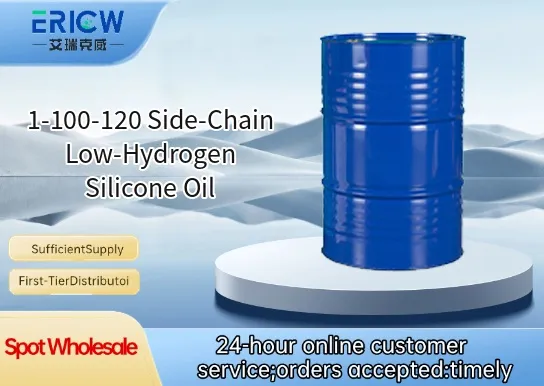
Side-chain functionalized molecular architecture ensures exceptional thermal stability up to 250 °C.
Low hydrogen content minimizes catalytic side reactions in platinum-cured silicone systems.
High compatibility with vinyl-terminated and hydrosilylation-curable silicone polymers.
Low volatility and negligible extractables, supporting compliance with ISO 10993 for medical device lubrication.
Tailored rheology for precise coating, impregnation, and release agent performance without migration issues.
Release agent for high-temperature silicone rubber molding (e.g., automotive gaskets and seals).
Lubricant additive in medical-grade silicone tubing and catheter coatings.
Surface modifier for silicone elastomer composites requiring enhanced dielectric stability.
Carrier fluid in platinum-catalyzed liquid silicone rubber (LSR) formulations for precision parts.
Hydrophobic treatment agent for specialty filter media and porous ceramic substrates.
| Chemical Type | Side-chain alkyl-modified polydimethylsiloxane with controlled Si–H functionality |
| Product Form | Clear, colorless to pale yellow liquid |
| Appearance | Homogeneous, low-viscosity liquid at 25 °C |
| Primary Applications | Release agents, LSR processing aids, medical device lubricants, surface modifiers |
| Key Features | Low hydrogen content, thermal stability, hydrolytic resistance, non-yellowing |
| Benefits | Extended catalyst life, reduced post-cure volatiles, improved surface uniformity, regulatory suitability |
| Storage Conditions | Store in sealed containers at 5–30 °C, protect from moisture and direct sunlight |
| Shelf Life | 24 months from date of manufacture under recommended storage |
Q1: What distinguishes this side-chain low-hydrogen silicone oil from conventional linear or branched silicone fluids?
A: Its side-chain architecture provides enhanced surface activity and compatibility with polar systems, while the low hydrogen content minimizes potential for catalytic side reactions—especially beneficial in heat-sensitive or platinum-cured formulations.
Q2: In which types of industrial coatings or inks is this product most commonly applied?
A: It is widely used to improve substrate wetting, leveling, and anti-cratering performance in high-solids acrylic and polyurethane coatings, as well as in UV-curable inkjet inks where low surface tension and minimal foam generation are critical.
Q3: How should this silicone oil be incorporated into a formulation to ensure optimal performance and stability?
A: It is typically added during the let-down stage under moderate agitation to avoid excessive air entrapment; pre-dilution in a compatible solvent or carrier resin is recommended for uniform dispersion, especially in low-viscosity systems.
Q4: Is this material suitable for use in food-contact or medical-grade applications?
A: While it meets general industrial purity standards, it is not pre-certified for direct food-contact or implantable medical use; end-use compliance requires full regulatory evaluation by the formulator, including extractables testing and system-level validation.
Contact With Us:
E-mail: wangxingqiang@ericwchem.com
Have a Questions? Call Us:
Add:
Building A1, Jiete Industrial Park, Huangpu District, Guangzhou City, Guangdong Province, China