English
 Español
 tiếng việt
 русский
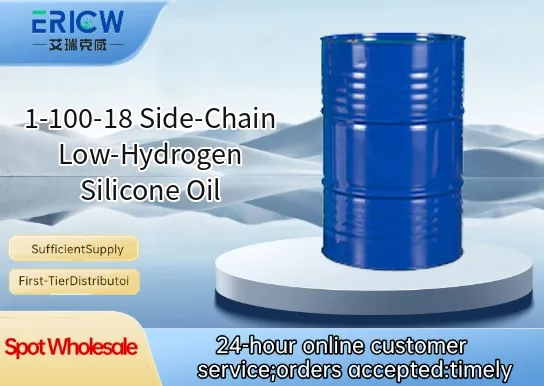
Exceptionally low residual hydrogen content ensures superior thermal and oxidative stability.
Side-chain molecular architecture delivers outstanding lubricity and surface slip without migration or blooming.
High compatibility with organic resins, thermoplastics, and silicone elastomers enables broad formulation flexibility.
Low volatility and negligible volatility loss under elevated processing temperatures support consistent performance in high-heat applications.
Non-yellowing and UV-stable profile maintains optical clarity and color integrity in sensitive end products.
Release agent for high-temperature rubber and silicone molding processes.
Internal and external lubricant in engineering thermoplastics (e.g., PBT, PC, PPA).
Surface modifier for silicone rubber compounds to enhance demolding and reduce friction.
Additive in specialty coatings and inks requiring mar resistance and substrate slip.
Processing aid in high-purity medical-grade silicone compound extrusion and calendering.
| Chemical Type | Side-chain functionalized polydimethylsiloxane (PDMS) with low Si–H content |
| Product Form | Clear, colorless to pale yellow liquid |
| Appearance | Homogeneous, mobile liquid at room temperature |
| Key Features | Low hydrogen, side-chain architecture, non-volatile, non-reactive under ambient conditions |
| Primary Applications | Lubrication, release, surface modification, processing aid |
| Storage Stability | Stable for ≥24 months in sealed container at 5–30°C |
| Compatibility | Compatible with most silicones, thermoplastics, and cured elastomers; test before full-scale use |
| Handling Precautions | Use in well-ventilated areas; avoid inhalation of mists; refer to SDS for full safety guidance |
Q1: What distinguishes 1-100-18 from conventional linear or alpha-omega silicone oils?
A: Unlike standard linear silicone oils, 1-100-18 features a side-chain architecture with controlled low hydrogen content, which enhances thermal stability and reduces volatility while maintaining excellent compatibility with organic resins and polymers. This structural design also contributes to improved surface migration control and reduced blooming in demanding applications.
Q2: Is 1-100-18 suitable for high-temperature processing environments, such as extrusion or injection molding?
A: Yes — its side-chain structure and low hydrogen content confer superior thermal and oxidative stability compared to many conventional silicone fluids. It remains effective under sustained processing temperatures commonly encountered in polymer compounding and thermoplastic processing, without significant degradation or volatile byproduct formation.
Q3: How does 1-100-18 perform as a surface modifier in coatings and inks?
A: It provides efficient surface enrichment and orientation, delivering consistent slip, mar resistance, and substrate wetting without compromising intercoat adhesion or gloss uniformity. Its low-migration behavior helps maintain long-term surface performance, especially in multi-layer or overprint systems.
Q4: Can 1-100-18 be used in food-contact or pharmaceutical-adjacent formulations?
A: While not pre-approved for direct food contact, 1-100-18 is formulated without intentionally added heavy metals, halogens, or restricted plasticizers. Its compatibility profile supports use in indirect food-contact applications (e.g., packaging coatings or processing aids), subject to final regulatory review and end-use validation by the formulator.
Contact With Us:
E-mail: wangxingqiang@ericwchem.com
Have a Questions? Call Us:
Add:
Building A1, Jiete Industrial Park, Huangpu District, Guangzhou City, Guangdong Province, China