English
 Español
 tiếng việt
 русский
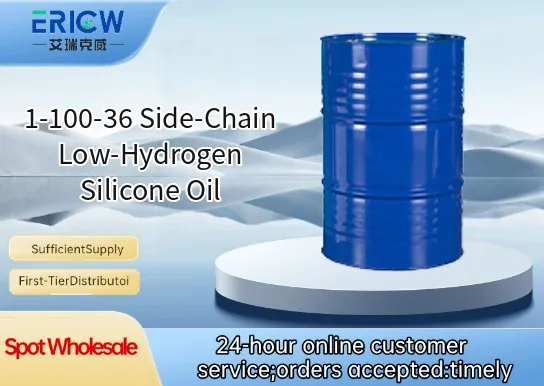
Low hydrogen content ensures exceptional thermal and oxidative stability under high-temperature processing conditions.
Side-chain molecular architecture delivers superior lubricity and surface slip without migration or blooming.
Excellent compatibility with organic resins, thermoplastics, and silicone elastomers for homogeneous blending.
Hydrophobic yet non-staining—maintains clarity and integrity in transparent polymer systems.
Low volatility and negligible extractables, meeting stringent requirements for medical-grade and food-contact-adjacent applications.
Internal release agent for high-heat silicone rubber molding (e.g., HTV and LSR compounds).
Surface modifier in engineering plastics such as polycarbonate and polyamide to enhance scratch resistance and tactile feel.
Processing aid in hot-melt adhesive formulations to improve melt flow and reduce die buildup.
Component in specialty coatings for optical films requiring low surface energy and long-term weatherability.
Functional additive in encapsulants and potting compounds for electronics, improving thermal interface performance and stress relief.
| Chemical Type | Side-chain substituted polydimethylsiloxane with controlled Si–H functionality |
| Product Form | Clear, colorless to pale yellow liquid |
| Appearance | Homogeneous, mobile liquid at 25°C |
| Viscosity (25°C, cSt) | 100 ± 15 |
| Refractive Index (25°C) | 1.400–1.408 |
| Density (25°C, g/cm³) | 0.97–0.99 |
| Volatile Content (150°C, 2h, wt%) | ≤ 1.5 |
| Key Features | Low hydrogen, side-chain architecture, non-reactive under ambient conditions |
Q1: What distinguishes 1-100-36 from conventional linear or end-blocked silicone oils?
A: 1-100-36 features a side-chain architecture with low hydrogen content, offering enhanced thermal stability and reduced volatility compared to many linear analogues. Its branched molecular structure improves compatibility with polar resins and polymers while maintaining low surface tension and excellent leveling characteristics.
Q2: In which types of coating or ink systems is this silicone oil most commonly applied?
A: It is widely used in high-performance industrial coatings, UV-curable inks, and water-based acrylic systems where superior substrate wetting, foam control, and defect-free film formation are required. Its side-chain design supports stable dispersion without excessive migration in cured films.
Q3: How should 1-100-36 be incorporated into formulations to ensure optimal performance?
A: It is typically added during the let-down or post-addition stage under moderate shear. Pre-dilution in a compatible solvent or carrier resin is recommended for uniform dispersion. Dosage depends on formulation requirements but generally ranges from 0.1% to 2% by weight of the total system.
Q4: Does this silicone oil exhibit compatibility with common catalysts or crosslinkers used in thermoset systems?
A: Yes — 1-100-36 demonstrates good compatibility with standard amine, tin, and titanate catalysts, as well as melamine, isocyanate, and silane-based crosslinkers. Its low hydrogen content minimizes potential interference with condensation or addition cure mechanisms.
Contact With Us:
E-mail: wangxingqiang@ericwchem.com
Have a Questions? Call Us:
Add:
Building A1, Jiete Industrial Park, Huangpu District, Guangzhou City, Guangdong Province, China