English
 Español
 tiếng việt
 русский
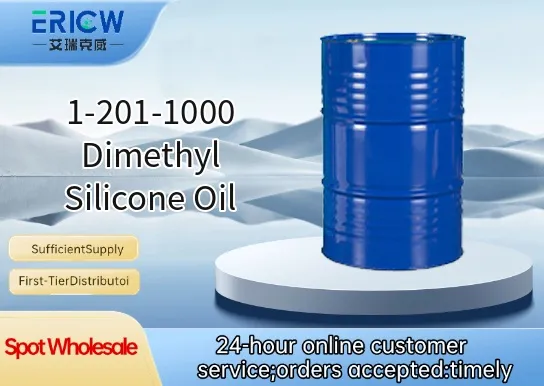
Exceptionally low volatility and high thermal stability up to 200 °C in continuous service.
Outstanding water repellency and surface slip without migration or staining.
Chemically inert toward acids, bases, and most organic solvents under standard conditions.
Low surface tension (≈20–22 mN/m at 25 °C) enabling uniform film formation and substrate wetting.
Non-toxic, non-irritating, and compliant with FDA 21 CFR 175.300 for incidental food contact applications.
Release agent for rubber and plastic molding, including silicone rubber and thermoplastic elastomers.
Base fluid in personal care formulations such as hair conditioners, skin creams, and antiperspirants.
Lubricant additive in precision instruments, optical assemblies, and micro-electromechanical systems (MEMS).
Defoaming and foam control agent in industrial coatings, adhesives, and textile finishing baths.
Surface modifier for enhancing hydrophobicity and abrasion resistance in architectural sealants and construction additives.
| Chemical Type | Linear polydimethylsiloxane (PDMS) |
| Product Form | Clear, colorless liquid |
| Appearance | Transparent, odorless, non-yellowing |
| Viscosity (cSt at 25 °C) | 1000 ± 100 |
| Density (g/cm³ at 25 °C) | 0.96–0.97 |
| Refractive Index (25 °C) | 1.402–1.405 |
| Flash Point (°C, Cleveland Open Cup) | ≥300 |
| Volatility (% weight loss at 200 °C/2h) | ≤1.5 |
Q1: What is the typical viscosity range for 1-201-1000 Dimethyl Silicone Oil?
A: This grade is formulated to deliver medium-viscosity performance, making it suitable for applications requiring balanced flow characteristics and film-forming capability without excessive thinning or drag.
Q2: Is 1-201-1000 compatible with common industrial solvents and polymer systems?
A: Yes — it demonstrates broad compatibility with hydrocarbon solvents, esters, and many thermoplastic and thermoset resins, supporting its use in coatings, adhesives, and elastomer processing aids.
Q3: How does this silicone oil function as a surface modifier in formulations?
A: It migrates to interfaces to reduce surface tension, thereby improving substrate wetting, leveling, and slip properties — typically used at low concentrations to avoid over-migration or bloom.
Q4: Can 1-201-1000 be used in food-contact or pharmaceutical-adjacent applications?
A: While not inherently restricted for such uses, suitability depends on final formulation compliance and regulatory review by the end-user — we recommend verifying conformance with applicable regional requirements before deployment.
Contact With Us:
E-mail: wangxingqiang@ericwchem.com
Have a Questions? Call Us:
Add:
Building A1, Jiete Industrial Park, Huangpu District, Guangzhou City, Guangdong Province, China