English
 Español
 tiếng việt
 русский
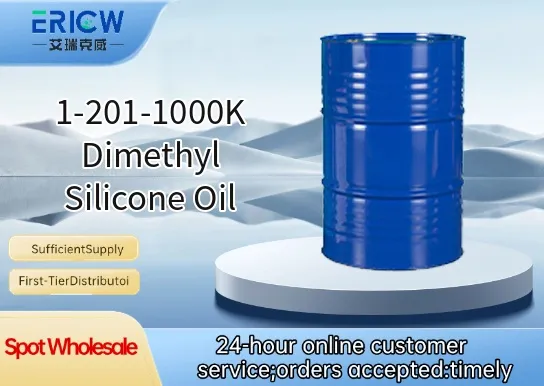
High thermal stability with continuous service temperature up to 200 °C.
Excellent hydrophobicity and moisture resistance for long-term environmental protection.
Low surface tension and superior spreading capability on diverse substrates.
Chemically inert—resistant to oxidation, UV degradation, and most acids/bases.
Non-toxic, non-volatile, and compliant with FDA 21 CFR 175.300 for incidental food contact applications.
Release agent in rubber and silicone molding processes.
Base fluid in high-performance lubricants and greases for precision instruments.
Defoaming and antifoaming agent in industrial coatings and water treatment systems.
Surface modifier in personal care formulations (e.g., hair conditioners and skin emollients).
Dielectric fluid in electronic potting and transformer cooling applications.
| Chemical Type | Linear polydimethylsiloxane (PDMS) |
| Product Form | Clear, colorless liquid |
| Appearance | Water-white, odorless, and transparent |
| Kinematic Viscosity (25 °C) | 1,000,000 cSt ±10% |
| Density (25 °C) | 0.97 g/cm³ |
| Refractive Index (25 °C) | 1.403–1.405 |
| Flash Point (COC) | ≥300 °C |
| Volatility (200 °C, 24 h) | <1.0% weight loss |
Q1: What is the primary function of 1-201-1000K Dimethyl Silicone Oil in industrial formulations?
A: It serves primarily as a high-viscosity silicone fluid for lubrication, release, damping, and surface modification—especially where thermal stability, water repellency, and low surface tension are required.
Q2: Is this grade suitable for use in food-contact or pharmaceutical applications?
A: 1-201-1000K is not pre-certified for direct food or pharmaceutical use; customers must verify compliance with applicable regional regulations and perform their own suitability testing for such applications.
Q3: How does 1-201-1000K differ from lower-viscosity dimethyl silicone oils?
A: With its high kinematic viscosity (designated by the "1000K" suffix), it provides greater film persistence, enhanced load-carrying capacity, and improved resistance to migration compared to lower-viscosity grades—making it preferred for heavy-duty lubrication and long-term release applications.
Q4: Can 1-201-1000K be diluted or blended with other silicone fluids or carriers?
A: Yes—it is fully miscible with most linear and branched silicone oils, as well as common organic solvents; however, compatibility with reactive systems (e.g., platinum-cure silicones) should be confirmed experimentally prior to large-scale blending.
Contact With Us:
E-mail: wangxingqiang@ericwchem.com
Have a Questions? Call Us:
Add:
Building A1, Jiete Industrial Park, Huangpu District, Guangzhou City, Guangdong Province, China