English
 Español
 tiếng việt
 русский
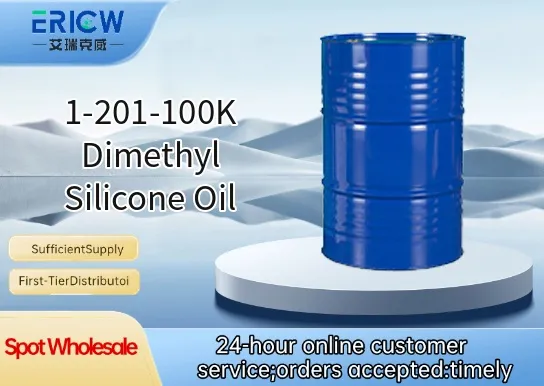
Ultra-high viscosity grade (approximately 100,000 cSt at 25°C) for exceptional film-forming and lubricating performance.
Outstanding thermal stability — maintains integrity over a wide temperature range from –50°C to +200°C.
Chemically inert and hydrophobic, ensuring compatibility with most plastics, elastomers, and metals.
Low surface tension and excellent spreading characteristics for uniform coating and release functionality.
Non-toxic, odorless, and non-volatile — meets general industrial safety and handling requirements.
Mold release agent for high-precision rubber, silicone, and polyurethane molding processes.
Base fluid in specialty greases and high-viscosity lubricants for slow-moving or heavily loaded mechanisms.
Viscosity modifier and carrier fluid in personal care formulations requiring long-lasting slip and emolliency.
Dielectric fluid in high-voltage equipment where thermal and electrical insulation stability is critical.
Component in antifoam and defoaming agents for industrial process streams and coatings.
| Chemical Type | Linear polydimethylsiloxane (PDMS) |
| Product Form | Clear, colorless liquid |
| Appearance | Water-white, transparent, and homogeneous |
| Viscosity (25°C) | Approx. 100,000 cSt (ASTM D2161) |
| Density (25°C) | Approx. 0.97 g/cm³ |
| Refractive Index (25°C) | 1.403–1.405 |
| Volatile Content (200°C/2h) | < 1.0% w/w |
| Flash Point (COC) | > 300°C |
Q1: What is the primary function of 1-201-100K Dimethyl Silicone Oil in industrial formulations?
A: It serves primarily as a high-viscosity silicone fluid for lubrication, release, and surface modification—commonly used to reduce friction, improve mold release performance, and enhance slip and leveling in coatings, adhesives, and elastomer processing.
Q2: Is this product compatible with common organic solvents and polymer systems?
A: Yes, 1-201-100K exhibits good compatibility with many hydrocarbon solvents, esters, and non-polar polymers; however, it has limited miscibility with highly polar media such as water or low-molecular-weight alcohols. Compatibility testing under actual formulation conditions is recommended.
Q3: How does temperature affect the viscosity and handling characteristics of this oil?
A: As a high-viscosity dimethyl silicone fluid, its viscosity decreases predictably with increasing temperature—enabling easier pumping and dispersion at elevated processing temperatures—while retaining excellent thermal stability and minimal volatility up to typical industrial operating ranges.
Q4: Can this silicone oil be used in applications requiring FDA compliance for incidental food contact?
A: While dimethyl silicone oils are widely accepted for indirect food contact under FDA 21 CFR §177.2600, specific regulatory acceptance depends on final formulation, processing conditions, and intended use. Customers should verify suitability with their regulatory team and consult current FDA guidance.
Contact With Us:
E-mail: wangxingqiang@ericwchem.com
Have a Questions? Call Us:
Add:
Building A1, Jiete Industrial Park, Huangpu District, Guangzhou City, Guangdong Province, China