English
 Español
 tiếng việt
 русский
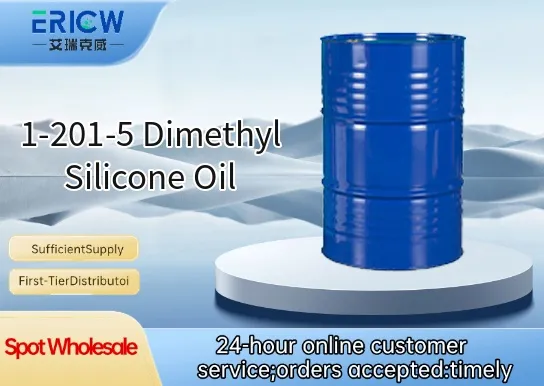
Exceptionally low volatility and high thermal stability for extended service life under elevated temperatures.
Outstanding hydrophobicity and surface slip, providing effective water repellency and lubricity.
Chemically inert toward most acids, bases, and oxidizing agents under normal processing conditions.
Excellent dielectric properties with high volume resistivity and low dielectric loss.
Clear, colorless, odorless liquid with consistent viscosity performance across wide temperature ranges.
Release agent for rubber, plastic, and composite molding processes.
Base fluid in personal care formulations including hair conditioners and skin emollients.
Lubricant additive for precision instruments, optical assemblies, and vacuum systems.
Defoaming and antifoaming agent in industrial cleaning and coating systems.
Damping fluid in automotive shock absorbers and industrial vibration dampers.
| Chemical Type | Linear polydimethylsiloxane (PDMS) |
| Product Form | Clear, colorless liquid |
| Appearance | Transparent, homogeneous, free from visible particles or haze |
| Viscosity (cSt, 25°C) | 5 ± 0.5 |
| Density (g/cm³, 25°C) | 0.96–0.97 |
| Refractive Index (25°C) | 1.395–1.405 |
| Flash Point (°C, Cleveland Open Cup) | ≥300 |
| Volatile Content (% wt, 200°C/2h) | ≤0.5 |
Q1: What is the primary functional role of 1-201-5 Dimethyl Silicone Oil in industrial formulations?
A: It serves primarily as a surface modifier and processing aid—improving lubricity, reducing friction, enhancing substrate wetting, and providing controlled release characteristics in coatings, adhesives, and polymer systems.
Q2: Is 1-201-5 Dimethyl Silicone Oil compatible with common organic solvents and resin systems?
A: Yes—it exhibits broad compatibility with hydrocarbon solvents, esters, ketones, and many thermoplastic and thermoset resins, including acrylics, epoxies, and polyurethanes. Compatibility should always be verified under actual processing conditions due to formulation-specific interactions.
Q3: How does temperature affect the viscosity stability of this silicone oil during storage and application?
A: 1-201-5 Dimethyl Silicone Oil demonstrates excellent thermal stability and minimal viscosity drift across typical industrial handling temperatures (–20 °C to +120 °C). Prolonged exposure above 150 °C may lead to gradual oxidative thinning, so high-temperature applications require evaluation.
Q4: Can it be used in applications requiring low surface tension and high spreading performance?
A: Yes—its low surface tension and high mobility enable rapid surface migration and uniform film formation, making it especially effective for leveling, anti-crawling, and anti-pinning effects in solvent-based and high-solids coatings.
Contact With Us:
E-mail: wangxingqiang@ericwchem.com
Have a Questions? Call Us:
Add:
Building A1, Jiete Industrial Park, Huangpu District, Guangzhou City, Guangdong Province, China