English
 Español
 tiếng việt
 русский
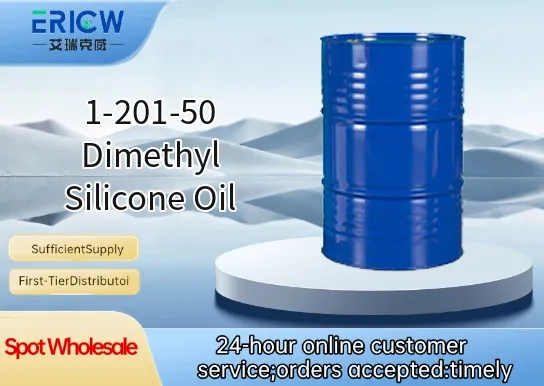
Excellent thermal stability across a wide temperature range (−40 °C to +200 °C).
Low surface tension and superior spreading/wetting performance on diverse substrates.
Chemically inert with high resistance to oxidation, UV radiation, and aging.
Non-volatile and non-yellowing under normal storage and processing conditions.
Compatible with common organic solvents, polymers, and fillers used in industrial formulations.
Release agent for rubber, plastic, and composite molding processes.
Base fluid in personal care formulations including hair conditioners and skin emollients.
Defoamer component in water-based paints, coatings, and industrial cleaning agents.
Lubricant additive for precision instruments, electrical contacts, and mechanical assemblies.
Surface modifier in silicone rubber compounding and RTV sealant systems.
| Chemical Type | Linear polydimethylsiloxane (PDMS) |
| Product Form | Clear, colorless liquid |
| Appearance | Transparent, odorless, non-staining |
| Viscosity (25 °C, cSt) | 50 ± 5 |
| Density (25 °C, g/cm³) | 0.96–0.97 |
| Refractive Index (25 °C) | 1.395–1.405 |
| Volatile Content (150 °C, 2 h, wt%) | ≤ 1.0% |
| Flash Point (COC, °C) | ≥ 300 |
Q1: What is the typical viscosity range and molecular weight profile of 1-201-50 Dimethyl Silicone Oil?
A: 1-201-50 is a medium-viscosity dimethyl silicone fluid with a nominal kinematic viscosity around 50 cSt at 25 °C. Its molecular weight distribution is narrow and consistent, supporting predictable rheological behavior in formulation applications.
Q2: Is this grade suitable for use in personal care formulations such as skin creams or hair conditioners?
A: Yes — 1-201-50 is widely used in cosmetic and personal care products due to its excellent spreadability, non-greasy feel, thermal stability, and compatibility with common emollients and surfactants. It is typically used at low concentrations to enhance texture and sensory performance.
Q3: How does 1-201-50 compare to higher-viscosity silicone oils in terms of volatility and film-forming properties?
A: Compared to higher-viscosity grades (e.g., 350 cSt or above), 1-201-50 exhibits lower volatility and faster surface diffusion, resulting in lighter, more breathable films. It balances effective surface coverage with reduced residue buildup, making it ideal for applications requiring rapid leveling and minimal tack.
Q4: Can 1-201-50 be used as a release agent in rubber or plastic molding processes?
A: Yes — its inertness, thermal stability up to approximately 200 °C, and ability to form uniform non-stick films make it well-suited for mold release applications in silicone rubber, thermoplastic, and polyurethane processing. Dosage depends on formulation requirements and substrate geometry.
Contact With Us:
E-mail: wangxingqiang@ericwchem.com
Have a Questions? Call Us:
Add:
Building A1, Jiete Industrial Park, Huangpu District, Guangzhou City, Guangdong Province, China