English
 Español
 tiếng việt
 русский
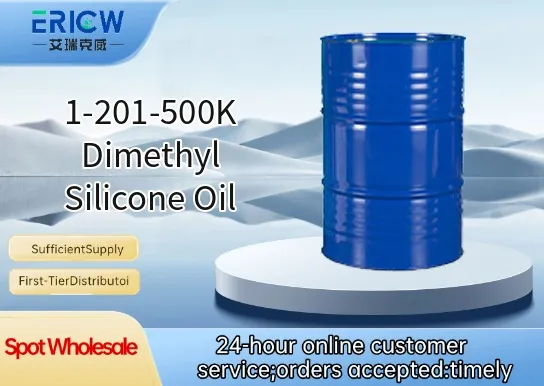
High thermal stability up to 200 °C in inert atmospheres.
Exceptional viscosity-temperature consistency across a wide operating range (−40 °C to +150 °C).
Low surface tension and excellent spreading/wetting behavior on diverse substrates.
Chemically inert toward most acids, bases, and oxidizing agents under normal conditions.
Non-volatile, non-toxic, and compliant with FDA 21 CFR §175.300 for incidental food contact applications.
Release agent for rubber and plastic molding, including silicone rubber and thermoplastic elastomers.
Base fluid in high-performance lubricating greases for precision instruments and automotive components.
Defoaming and antifoaming agent in water-based paints, coatings, and industrial cleaning formulations.
Dielectric fluid in transformers and capacitors requiring long-term insulation stability.
| Chemical Type | Linear polydimethylsiloxane (PDMS) |
| Product Form | Clear, colorless liquid |
| Appearance | Water-white, transparent, and odorless |
| Kinematic Viscosity (25 °C) | 500,000 ± 10% cSt |
| Density (25 °C) | 0.96–0.97 g/cm³ |
| Refractive Index (25 °C) | 1.402–1.405 |
| Flash Point (COC) | ≥310 °C |
| Volatility (200 °C, 24 h) | <1.0 wt% |
Q1: What is the primary function of 1-201-500K Dimethyl Silicone Oil in industrial formulations?
A: It serves primarily as a surface modifier and lubricity enhancer, improving slip, leveling, and substrate wetting in coatings, inks, adhesives, and personal care emulsions. Its high molecular weight contributes to persistent film formation and reduced surface tension without significant migration.
Q2: Is this silicone oil compatible with water-based systems?
A: Yes, it can be incorporated into water-based formulations using appropriate high-shear mixing or with the aid of compatible emulsifiers or co-solvents. However, it is not inherently water-soluble and requires careful dispersion to achieve stable, non-separating blends.
Q3: How does viscosity grade “500K” influence processing and end-use performance?
A: The “500K” designation indicates a very high kinematic viscosity, which supports long-lasting surface effects, enhanced film integrity, and resistance to volatilization. This makes it especially suitable for applications requiring extended durability—such as protective topcoats or high-slip additives—though it may require elevated temperature or dilution for easier handling during manufacturing.
Q4: Can this product be used in direct-contact food packaging applications?
A: While dimethyl silicone oils are widely accepted for indirect food contact under general FDA and EFSA guidelines for food-grade silicones, specific regulatory compliance depends on final formulation, concentration, and intended use conditions. Users must conduct their own due diligence and verify suitability with current regional food contact material regulations.
Contact With Us:
E-mail: wangxingqiang@ericwchem.com
Have a Questions? Call Us:
Add:
Building A1, Jiete Industrial Park, Huangpu District, Guangzhou City, Guangdong Province, China