English
 Español
 tiếng việt
 русский
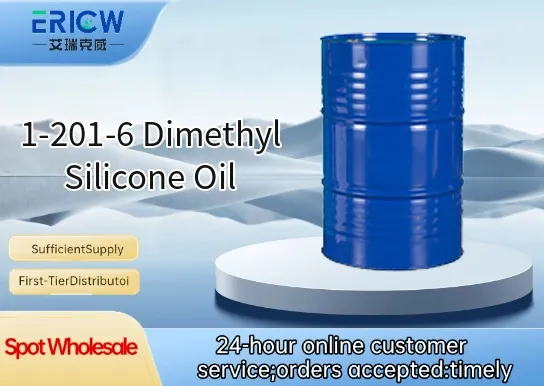
Exceptional thermal stability across a wide temperature range (−50 °C to +200 °C).
Low surface tension and excellent spreading/wetting behavior on diverse substrates.
Chemically inert with resistance to oxidation, UV radiation, and common solvents.
Non-volatile and non-yellowing under normal storage and processing conditions.
High flash point ensures enhanced safety during handling and high-temperature applications.
Release agent for rubber and plastic molding, including silicone rubber and thermoplastic elastomers.
Base fluid in personal care formulations such as hair conditioners and skin emollient systems.
Lubricant additive for precision instruments, optical components, and electrical contacts.
Defoaming and antifoaming agent in industrial coatings, adhesives, and water-based systems.
Surface modifier in textile finishing to impart softness, hydrophobicity, and anti-static properties.
| Chemical Type | Linear polydimethylsiloxane (PDMS) |
| Product Form | Clear, colorless liquid |
| Appearance | Transparent, odorless, non-staining |
| Viscosity (25 °C, cSt) | 1000 ± 150 |
| Density (25 °C, g/cm³) | 0.97–0.98 |
| Flash Point (PMCC, °C) | ≥300 |
| Volatile Content (% w/w, 200 °C/2 h) | ≤0.5 |
| Refractive Index (25 °C) | 1.402–1.405 |
Q1: What is the primary functional role of 1-201-6 Dimethyl Silicone Oil in formulations?
A: It functions primarily as a surface modifier and lubricity enhancer, improving slip, softness, and hydrophobicity in coatings, personal care emulsions, and polymer processing aids.
Q2: Is 1-201-6 compatible with water-based systems?
A: While inherently hydrophobic, it can be effectively incorporated into aqueous systems using appropriate emulsifiers or high-shear processing—commonly used in silicone emulsions for textile or cosmetic applications.
Q3: How does viscosity affect its performance in different applications?
A: Lower-viscosity grades like 1-201-6 offer better dispersion and faster surface migration, making them suitable for release agents, mold lubricants, and fast-drying coatings where rapid film formation is desired.
Q4: Can it be used in food-contact or pharmaceutical applications?
A: Its suitability depends on compliance with applicable regulatory requirements and final formulation validation; users must verify conformance with relevant food-grade or pharmaceutical excipient specifications through their qualified suppliers and internal testing protocols.
Contact With Us:
E-mail: wangxingqiang@ericwchem.com
Have a Questions? Call Us:
Add:
Building A1, Jiete Industrial Park, Huangpu District, Guangzhou City, Guangdong Province, China