English
 Español
 tiếng việt
 русский
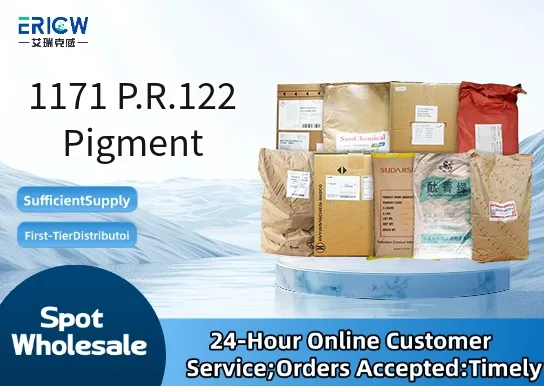
High chroma and excellent color strength for vivid red shades.
Outstanding thermal stability up to 250 °C, suitable for high-temperature processing.
Good lightfastness (ASTM Level 7–8) and weather resistance in outdoor applications.
Low volatility and negligible migration in polymer systems.
Excellent dispersibility in both polar and non-polar media, including polyolefins and engineering resins.
Coloration of polypropylene (PP) and polyethylene (PE) injection-molded parts.
Automotive interior plastics requiring long-term UV and heat resistance.
Masterbatch formulations for food-contact-compliant packaging films.
Engineering thermoplastics such as ABS, PS, and PC for durable consumer goods.
Industrial coatings where high opacity and chemical resistance are critical.
| Chemical Type | Organic Pigment – Quinacridone Derivative |
| Product Form | Fine free-flowing powder |
| Appearance | Red-violet crystalline powder |
| Primary Applications | Polymer coloration, masterbatches, industrial coatings |
| Key Features | High thermal stability, low extractability, excellent dispersion |
| Regulatory Compliance | EU REACH compliant; FDA 21 CFR §178.3297 compliant for food-contact polymers |
| Bulk Density | 0.35–0.45 g/cm³ |
| Particle Size (D50) | 0.12–0.18 µm |
Q1: What is the primary chemical class and typical application domain for 1171 P.R.122 Pigment?
A: 1171 P.R.122 is a high-performance perylene-based red pigment, widely used in demanding industrial applications such as automotive coatings, high-gloss architectural paints, and engineering plastics where excellent lightfastness, thermal stability, and color strength are required.
Q2: Is 1171 P.R.122 suitable for use in food-contact or pharmaceutical packaging materials?
A: No — 1171 P.R.122 is not certified for direct food contact or pharmaceutical applications. It is formulated for industrial and decorative uses only; regulatory compliance for food-grade systems requires pigments specifically designed and approved for those purposes.
Q3: How does 1171 P.R.122 perform under elevated processing temperatures, such as during extrusion of polyolefins or polyesters?
A: This pigment demonstrates good thermal stability and retains its color integrity during standard polymer processing conditions, including melt compounding and injection molding. Performance may vary depending on residence time, shear history, and base resin compatibility — we recommend conducting application-specific trials.
Q4: What dispersion methods are recommended to achieve optimal color development and consistency?
A: For best results, pre-disperse 1171 P.R.122 using high-shear mixing or bead milling in compatible solvents or carrier resins. Optimal dispersion enhances transparency, gloss, and batch-to-batch reproducibility — especially critical in clear-coat and tinting applications.
Contact With Us:
E-mail: wangxingqiang@ericwchem.com
Have a Questions? Call Us:
Add:
Building A1, Jiete Industrial Park, Huangpu District, Guangzhou City, Guangdong Province, China