English
 Español
 tiếng việt
 русский
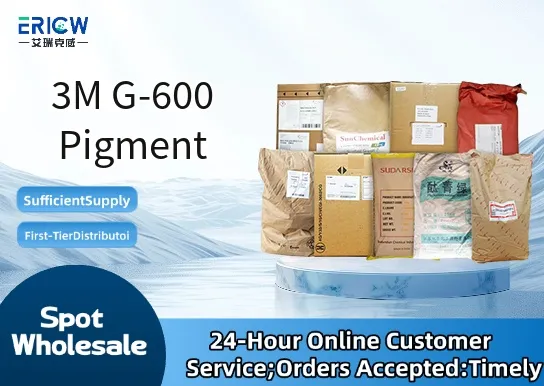
High thermal stability up to 280°C, enabling compatibility with high-temperature polymer processing.
Excellent lightfastness and weather resistance, maintaining color integrity under prolonged UV exposure.
Low migration tendency in plastic matrices, ensuring color consistency and regulatory compliance in food-contact applications.
Uniform particle size distribution for optimal dispersion and minimal filter clogging during extrusion.
Halogen-free formulation, supporting RoHS and REACH compliance requirements.
Coloration of polypropylene (PP) and polyethylene (PE) for automotive interior components.
Pigmenting engineering thermoplastics including ABS and polycarbonate for electronic housings.
Masterbatch production for food-grade packaging films and containers.
Industrial coatings requiring long-term outdoor durability and gloss retention.
Non-woven fibers and spunbond fabrics used in filtration and geotextile applications.
| Chemical Type | Organic pigment (high-performance azo derivative) |
| Product Form | Free-flowing powder |
| Appearance | Finely divided greenish-yellow powder |
| Primary Applications | Plastics, masterbatches, industrial coatings |
| Key Features | Thermal stability, low volatility, non-bleeding |
| Benefits | Consistent color development, easy dispersion, regulatory compliance |
| Density (g/cm³) | 1.45–1.55 |
| Volatile Content (wt%) | ≤0.5% |
Q1: What is the primary chemical nature of 3M G-600 Pigment?
A: 3M G-600 Pigment is an inorganic, high-performance pigment based on a stabilized metal oxide complex, engineered for thermal and chemical stability in demanding polymer processing environments.
Q2: In which polymer systems is 3M G-600 Pigment typically used?
A: It is commonly incorporated into engineering thermoplastics such as polyamide (PA), polypropylene (PP), and polyethylene (PE), especially where long-term color retention and resistance to melt-processing conditions are required.
Q3: How is 3M G-600 Pigment typically dispersed in resin systems?
A: It is supplied in a masterbatch-ready form and achieves optimal dispersion via standard compounding techniques—such as twin-screw extrusion—without requiring additional surface treatment or coupling agents in most formulations.
Q4: Is 3M G-600 Pigment suitable for food-contact applications?
A: While it exhibits excellent inertness and low extractability, suitability for food-contact use depends on final regulatory evaluation of the complete formulation—including polymer matrix, processing conditions, and end-use requirements—and must be confirmed by the compounder or end-user per applicable regional regulations.
Q5: What is the typical dosage range for achieving target color intensity?
A: Dosage is formulation-dependent, but effective coloration is generally achieved at low concentrations—typically ranging from 0.1% to 2% by weight—depending on base resin, desired hue depth, and processing method.
Contact With Us:
E-mail: wangxingqiang@ericwchem.com
Have a Questions? Call Us:
Add:
Building A1, Jiete Industrial Park, Huangpu District, Guangzhou City, Guangdong Province, China