English
 Español
 tiếng việt
 русский
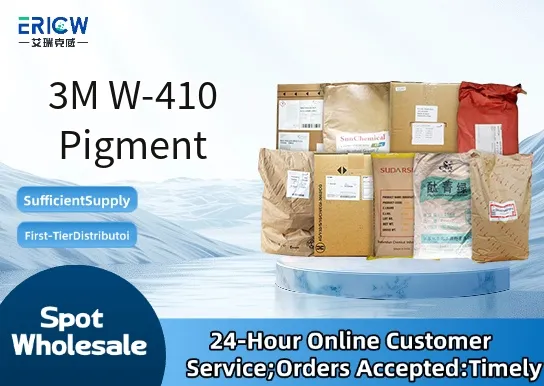
Highly dispersible in aqueous and solvent-based systems for consistent color development.
Excellent lightfastness and weather resistance, maintaining color integrity under UV exposure.
Low volatile organic compound (VOC) content, supporting sustainable formulation requirements.
Non-hazardous classification per GHS, simplifying handling and regulatory compliance.
Thermally stable up to 220°C, suitable for high-temperature processing applications.
Architectural and industrial coatings requiring durable, fade-resistant coloration.
Plastic colorants for extrusion and injection-molded polyolefin and PVC compounds.
Printing inks for flexible packaging and label applications demanding high chroma and gloss.
Automotive refinish coatings where consistency and outdoor durability are critical.
Construction materials including colored concrete admixtures and fiber-cement board pigmentation.
| Chemical Type | Inorganic complex oxide pigment |
| Product Form | Fine dry powder |
| Appearance | Free-flowing reddish-brown powder |
| Primary Applications | Coatings, plastics, inks, construction materials |
| Key Features | UV-stable, non-toxic, low-dusting, high tinting strength |
| Benefits | Reduced formulation complexity, improved batch-to-batch consistency, extended service life |
| Storage Conditions | Store in cool, dry location; keep container tightly closed |
| Regulatory Compliance | REACH registered; compliant with FDA 21 CFR 178.3297 for indirect food contact (when used as directed) |
Q1: What is the primary function of 3M W-410 Pigment in industrial coatings and inks?
A: 3M W-410 Pigment is a high-performance white pigment designed to deliver strong hiding power, excellent brightness, and consistent dispersion stability in solvent-based and high-solids coating systems. It is commonly used to enhance opacity and whiteness without compromising film integrity or gloss retention.
Q2: Is 3M W-410 Pigment suitable for use in food-contact coatings?
A: 3M W-410 Pigment is not specifically formulated or certified for direct food-contact applications. Its suitability for such uses depends on full regulatory evaluation by the end-formulator, including compliance with applicable regional food-contact regulations and migration assessments.
Q3: How should 3M W-410 Pigment be dispersed in resin systems?
A: Optimal dispersion is typically achieved using high-shear mixing or media milling in compatible solvents or liquid resins. Pre-wetting with carrier medium and gradual incorporation into the binder phase help minimize agglomeration and support uniform particle distribution.
Q4: Does 3M W-410 Pigment offer UV resistance benefits compared to standard titanium dioxide pigments?
A: Yes — 3M W-410 Pigment incorporates surface treatments that improve photostability and reduce catalytic degradation of surrounding binders under UV exposure, supporting longer-term color retention and reduced chalking in exterior applications.
Contact With Us:
E-mail: wangxingqiang@ericwchem.com
Have a Questions? Call Us:
Add:
Building A1, Jiete Industrial Park, Huangpu District, Guangzhou City, Guangdong Province, China