English
 Español
 tiếng việt
 русский
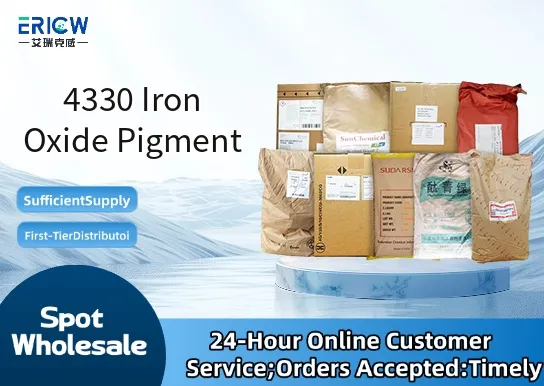
High thermal stability suitable for processing temperatures up to 800 °C.
Excellent lightfastness and weather resistance in outdoor applications.
Consistent particle size distribution ensuring uniform dispersion and color strength.
Non-toxic, heavy-metal-free formulation compliant with ISO 10672 and EU REACH requirements.
Low oil absorption (<25 g/100 g) enabling high loading in polymer and coating systems.
Ceramic glazes and kiln-fired tile colorants.
Architectural concrete and precast concrete products.
High-temperature industrial coatings for metal substrates.
Plastic masterbatches for automotive interior components.
Construction mortars and dry-mix rendering compounds.
| Chemical Type | α-Fe₂O₃ (Hematite) |
| Product Form | Free-flowing fine powder |
| Appearance | Red-brown to burnt sienna, matte finish |
| Primary Applications | Ceramics, concrete, high-temp coatings, plastics |
| Key Features | Thermal stability, UV resistance, low solubility in water/alkalis |
| Particle Size (D₅₀) | 0.8–1.2 μm |
| Bulk Density | 0.9–1.1 g/cm³ |
| VOC Content | Non-volatile (0% VOC) |
Q1: What is the primary chemical composition and crystal structure of 4330 Iron Oxide Pigment?
A: 4330 is a synthetic iron oxide pigment based predominantly on hematite (α-Fe₂O₃), offering excellent color stability and UV resistance. Its crystalline structure contributes to high tinting strength and thermal robustness in demanding processing environments.
Q2: Is 4330 suitable for use in polymer masterbatches, and what dispersion considerations apply?
A: Yes, 4330 is widely used in polyolefin, PVC, and engineering thermoplastic masterbatches. It exhibits good compatibility with common dispersants and carrier resins; optimal dispersion typically requires high-shear compounding and may benefit from surface treatment depending on the base polymer polarity.
Q3: How does 4330 perform under elevated temperature and UV exposure during outdoor applications?
A: As a fully calcined inorganic oxide, 4330 demonstrates outstanding thermal stability—retaining color integrity well above 200 °C—and excellent resistance to photodegradation, making it suitable for long-term exterior applications such as architectural coatings and weatherable plastics.
Q4: Can 4330 be used in water-based systems, and what formulation adjustments might be needed?
A: Yes, 4330 can be incorporated into water-based paints, inks, and construction mortars. For stable aqueous dispersions, appropriate wetting agents and rheology modifiers are recommended to prevent agglomeration and ensure uniform distribution.
Q5: What safety and handling precautions are advised for industrial use of 4330?
A: As a fine particulate inorganic material, standard occupational hygiene practices apply: use local exhaust ventilation during handling, avoid inhalation of dust, and wear appropriate PPE such as N95 respirators and gloves. The pigment is not classified as hazardous under GHS for acute toxicity or environmental hazards, but dust control remains essential.
Contact With Us:
E-mail: wangxingqiang@ericwchem.com
Have a Questions? Call Us:
Add:
Building A1, Jiete Industrial Park, Huangpu District, Guangzhou City, Guangdong Province, China