English
 Español
 tiếng việt
 русский
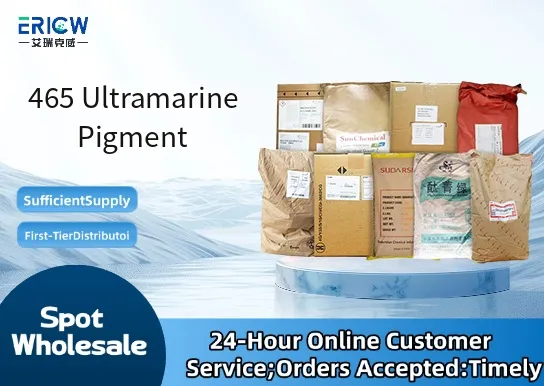
High chromatic strength with intense, clean blue-violet hue.
Excellent lightfastness and weather resistance for long-term color stability.
Good thermal stability up to 180°C in polymer processing applications.
Non-toxic, sulfate-free formulation compliant with major global safety standards.
Low oil absorption ensures efficient dispersion in aqueous and solvent-based systems.
Plastics: Polyolefins, PVC, and engineering resins requiring vibrant blue tones.
Inks: High-performance offset, gravure, and flexographic printing inks.
Paints & Coatings: Architectural paints, industrial finishes, and powder coatings.
Artists’ Colors: Professional-grade acrylics, gouaches, and watercolor formulations.
Construction Materials: Colored concrete, stucco, and decorative mortars.
| Chemical Type | Sodium aluminosilicate sulfur complex |
| Product Form | Fine dry powder |
| Appearance | Free-flowing, deep violet-blue powder |
| Primary Applications | Plastics, inks, paints, construction materials, artists’ colors |
| Key Features | Lightfastness (ISO 105-B02): Grade 7–8; Heat stability: ≤180°C |
| Benefits | Non-toxic, heavy-metal-free, REACH-compliant, low migration |
| pH Range (in aqueous dispersion) | 6.5–8.5 |
| Particle Size (D50) | 8–12 µm |
Q1: What is the primary chemical composition and structural basis of 465 Ultramarine Pigment?
A: 465 Ultramarine Pigment is a synthetic inorganic pigment based on the sodalite structure, composed primarily of sodium aluminosilicate with sulfur-containing chromophores responsible for its intense blue to violet hues. It is free from heavy metals such as lead, cadmium, or chromium, making it suitable for select non-toxic applications.
Q2: Is 465 Ultramarine Pigment compatible with acidic systems or low-pH formulations?
A: No — ultramarine pigments are inherently sensitive to acidic conditions. Exposure to pH below approximately 5–6 may cause irreversible color fading or discoloration due to decomposition of the sulfur-based chromophore. It is recommended for neutral to alkaline systems only, such as certain coatings, plastics, and artist materials.
Q3: How does 465 Ultramarine Pigment perform under heat exposure during processing?
A: 465 Ultramarine Pigment exhibits moderate thermal stability and is generally suitable for applications involving processing temperatures up to approximately 180–200 °C for short durations. Prolonged exposure above this range, especially in the presence of moisture or oxidizing agents, may result in partial degradation and shift toward grayish or greenish tones.
Q4: Can 465 Ultramarine Pigment be used in food-contact or pharmaceutical applications?
A: 465 Ultramarine Pigment is not approved for direct food contact or pharmaceutical use under major global regulatory frameworks. While it meets certain purity specifications for cosmetics and toys in specific regions, its suitability for regulated end uses must be confirmed case-by-case with applicable local authorities and supported by full compliance documentation.
Contact With Us:
E-mail: wangxingqiang@ericwchem.com
Have a Questions? Call Us:
Add:
Building A1, Jiete Industrial Park, Huangpu District, Guangzhou City, Guangdong Province, China