English
 Español
 tiếng việt
 русский
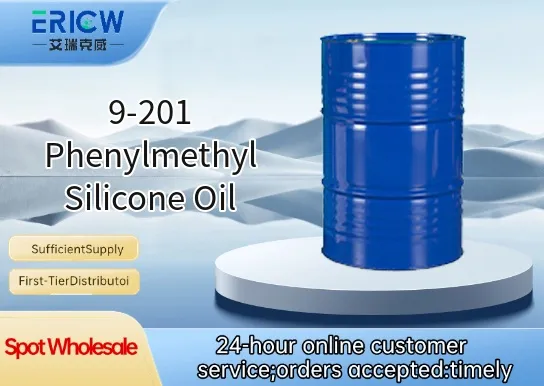
Excellent thermal stability up to 250 °C, maintaining viscosity and performance under prolonged high-temperature exposure.
Superior oxidative resistance due to phenyl group substitution, minimizing degradation in demanding industrial environments.
Broad compatibility with organic solvents, resins, and elastomers—ideal for formulation flexibility in specialty coatings and adhesives.
Low volatility and negligible vapor pressure at room temperature, enhancing workplace safety and shelf-life stability.
Good dielectric properties with stable electrical insulation across wide temperature and frequency ranges.
High-temperature heat transfer fluids in semiconductor manufacturing and thermal cycling equipment.
Base fluid in specialty lubricants for aerospace actuators and precision instrumentation requiring low-temperature torque and high-temperature retention.
Release agent component for silicone rubber molding and composite part demolding under elevated curing temperatures.
Viscosity modifier and stabilizer in high-performance optical gels and LED encapsulants.
Dielectric coolant in high-voltage transformers and pulse power capacitors where thermal robustness is critical.
| Chemical Type | Phenylmethyl-substituted linear polydimethylsiloxane |
| Product Form | Clear, colorless to pale yellow liquid |
| Appearance | Homogeneous, transparent, free of sediment or haze |
| Viscosity (25 °C, cSt) | 1000 ± 150 |
| Density (25 °C, g/cm³) | 1.04–1.07 |
| Refractive Index (25 °C) | 1.495–1.505 |
| Flash Point (COC, °C) | ≥310 |
| Volatility (200 °C, 24 h, wt%) | ≤1.5 |
Q1: What distinguishes 9-201 Phenylmethyl Silicone Oil from standard dimethyl silicone oils?
A: The phenyl groups in its backbone significantly enhance thermal stability, UV resistance, and compatibility with aromatic solvents and polymers—making it especially suitable for high-performance coatings, specialty adhesives, and optical applications where conventional dimethyl silicones may degrade or phase-separate.
Q2: Is 9-201 compatible with common industrial resins and additives?
A: Yes—it demonstrates broad compatibility with epoxy, polyurethane, acrylic, and polyester resin systems, as well as many organic pigments and rheology modifiers. However, compatibility testing under actual processing conditions (e.g., shear, temperature, cure profile) is recommended prior to full-scale integration.
Q3: How should 9-201 be incorporated into formulations to ensure optimal performance?
A: It is typically added during the late-stage mixing phase under moderate agitation to avoid excessive foaming. Due to its low surface tension and high spreading tendency, gradual addition with adequate dispersion time helps achieve uniform distribution without compromising viscosity or film integrity.
Q4: Can 9-201 be used in applications requiring food-contact compliance?
A: While 9-201 is not inherently non-compliant, it is not pre-approved for direct food-contact applications under major regulatory frameworks. Formulators must conduct full regulatory assessment—including migration testing and supplier documentation review—based on final product composition and intended use.
Contact With Us:
E-mail: wangxingqiang@ericwchem.com
Have a Questions? Call Us:
Add:
Building A1, Jiete Industrial Park, Huangpu District, Guangzhou City, Guangdong Province, China