English
 Español
 tiếng việt
 русский
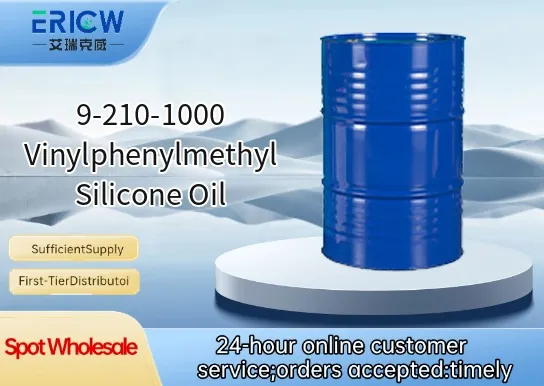
High thermal stability with continuous service temperature up to 200 °C.
Excellent compatibility with organic resins, vinyl polymers, and silicone elastomers.
Reactive vinyl groups enable covalent bonding in hydrosilylation-cured systems.
Low volatility and negligible evaporation loss under standard processing conditions.
Phenyl substitution enhances UV resistance and reduces refractive index for optical applications.
Base fluid in high-performance silicone pressure-sensitive adhesives (PSAs).
Reactive modifier for LED encapsulation gels and optical bonding materials.
Processing aid in heat-resistant silicone rubber compounding.
Component in specialty release coatings for high-temperature industrial liners.
Viscosity adjuster and functional carrier in platinum-catalyzed liquid silicone rubber (LSR) formulations.
| Chemical Type | Vinylphenylmethyl polysiloxane |
| Product Form | Clear, colorless to pale yellow liquid |
| Appearance | Homogeneous, low-viscosity oil |
| Primary Applications | Reactive silicone modifiers, optical gels, PSAs, LSR formulation |
| Key Features | Vinyl functionality, phenyl substitution, thermal/UV stability |
| Benefits | Enables covalent network formation, improves aging resistance, enhances clarity |
| Storage Conditions | Store in sealed containers at 5–30 °C, protect from moisture and direct sunlight |
| Shelf Life | 24 months from date of manufacture when stored properly |
Q1: What distinguishes 9-210-1000 from standard methyl silicone oils?
A: 9-210-1000 features a vinylphenylmethyl siloxane backbone, combining phenyl groups for enhanced thermal stability and aromatic compatibility with vinyl functionality for potential crosslinking or covalent incorporation into reactive systems—unlike conventional dimethyl silicone oils.
Q2: Is this product suitable for high-temperature applications?
A: Yes—its phenyl content imparts improved thermal resistance compared to purely aliphatic silicones, making it appropriate for use in formulations exposed to sustained elevated temperatures, such as heat-resistant coatings or specialty lubricants.
Q3: Can 9-210-1000 be used as a reactive modifier in silicone elastomers or resins?
A: Yes—the pendant vinyl groups enable participation in hydrosilylation reactions with Si–H functional compounds, allowing it to serve as a reactive diluent, chain extender, or functional additive in platinum-catalyzed silicone systems.
Q4: How should this oil be handled and stored to maintain performance?
A: Store in tightly sealed containers under inert atmosphere (e.g., nitrogen) at cool, dry conditions away from direct sunlight and strong oxidizers. Minimize exposure to moisture and platinum catalysts prior to intended use to prevent premature reaction or viscosity drift.
Q5: What types of solvents or matrices is 9-210-1000 typically compatible with?
A: It exhibits good miscibility with aromatic hydrocarbons, chlorinated solvents, and many organic resins due to its phenyl moiety, and shows moderate compatibility with polar polymers where surface energy matching supports dispersion—though compatibility testing in final formulations is recommended.
Contact With Us:
E-mail: wangxingqiang@ericwchem.com
Have a Questions? Call Us:
Add:
Building A1, Jiete Industrial Park, Huangpu District, Guangzhou City, Guangdong Province, China