English
 Español
 tiếng việt
 русский
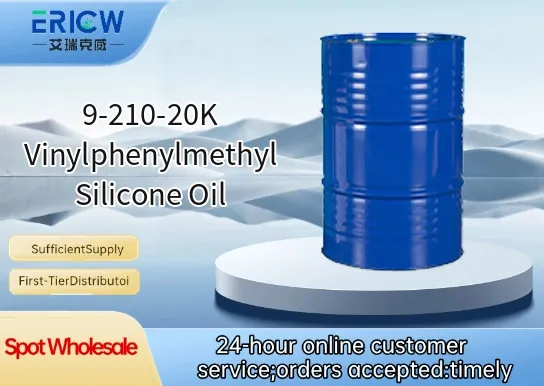
High thermal stability with continuous service temperature up to 200 °C.
Excellent compatibility with organic resins, vinyl polymers, and phenolic systems.
Low volatility and minimal outgassing under vacuum or elevated-temperature conditions.
Reactive vinyl groups enable covalent bonding in crosslinking formulations.
Phenyl substitution enhances UV resistance and reduces refractive index variation.
Release agent for high-temperature composite molding (e.g., CFRP, GFRP).
Functional additive in silicone-modified acrylic and epoxy coatings.
Base fluid in specialty heat-transfer fluids for semiconductor processing equipment.
Viscosity modifier and surface conditioner in LED encapsulation gels.
| Chemical Type | Vinylphenylmethyl polysiloxane |
| Product Form | Clear, colorless to pale yellow liquid |
| Appearance | Homogeneous, low-viscosity oil |
| Viscosity (25 °C, cSt) | 20,000 ± 1,500 |
| Specific Gravity (25 °C) | 0.98–1.02 |
| Refractive Index (25 °C) | 1.495–1.505 |
| Vinyl Content (wt%) | 0.15–0.25 |
| Phenyl Content (wt%) | 18–22 |
Q1: What distinguishes 9-210-20K from standard methyl silicone oils?
A: 9-210-20K features a vinylphenylmethyl siloxane backbone, which imparts enhanced thermal stability, improved compatibility with aromatic and unsaturated systems, and greater reactivity in hydrosilylation-curable formulations compared to conventional dimethyl silicone oils.
Q2: Is this product suitable for use in heat-resistant coatings or encapsulants?
A: Yes — its phenyl and vinyl functional groups contribute to superior thermal and oxidative resistance, making it well-suited for high-performance coating additives, LED encapsulants, and thermal interface materials where long-term stability above 150 °C is required.
Q3: How does 9-210-20K perform in silicone rubber compounding?
A: It functions effectively as a reactive processing aid and rheology modifier in HTV and LSR systems, improving filler dispersion and reducing compound viscosity without compromising cure kinetics — especially when used alongside platinum catalysts.
Q4: Can it be blended with other silicone fluids or organic resins?
A: It exhibits good miscibility with phenyl-containing silicones and many acrylic, epoxy, and polyurethane resins due to its balanced polarity and aromatic content, though compatibility testing under end-use conditions is recommended.
Contact With Us:
E-mail: wangxingqiang@ericwchem.com
Have a Questions? Call Us:
Add:
Building A1, Jiete Industrial Park, Huangpu District, Guangzhou City, Guangdong Province, China