English
 Español
 tiếng việt
 русский
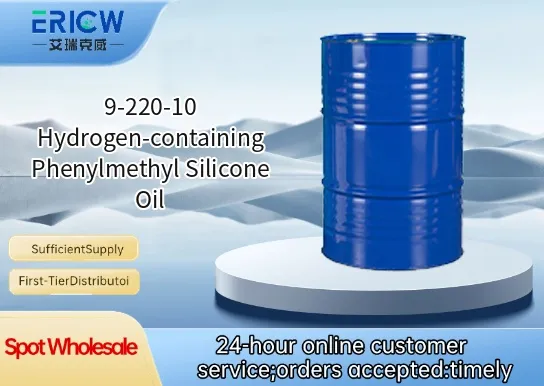
Contains reactive Si–H groups enabling efficient hydrosilylation with alkenes, alkynes, and functional silanes.
Phenylmethyl backbone delivers superior thermal stability and resistance to UV degradation versus pure methyl silicone oils.
Low volatility and high flash point ensure safe handling and processing in high-temperature industrial applications.
Excellent compatibility with organic resins, silicones, and crosslinkers for formulation flexibility.
Controlled molecular weight distribution ensures consistent reactivity and predictable cure kinetics.
Hydrosilylation-based release coatings for high-performance industrial molds and paper liners.
Crosslinking agent in heat-curable phenylmethyl silicone elastomers and gels.
Functional additive in specialty antifoams for aggressive chemical process environments.
Surface modifier for silica fillers and pigments in high-end coatings and adhesives.
Intermediate for synthesizing branched or graft silicone polymers with tailored phenyl content.
| Chemical Type | Hydrogen-containing phenylmethyl polysiloxane |
| Product Form | Clear, colorless to pale yellow liquid |
| Appearance | Homogeneous, low-viscosity oil, free of sediment or haze |
| Si–H Content (wt%) | 0.8 – 1.2% |
| Viscosity (25°C, cSt) | 200 – 250 |
| Density (25°C, g/cm³) | 0.98 – 1.02 |
| Flash Point (COC, °C) | ≥ 260 |
| Storage Stability | Stable ≥ 12 months at room temperature under dry, inert conditions |
Q1: What is the primary functional role of 9-220-10 in silicone-based formulations?
A: 9-220-10 serves as a reactive silicone modifier, providing Si–H functionality that enables hydrosilylation crosslinking with vinyl-terminated siloxanes. It imparts enhanced thermal stability, reduced surface tension, and improved compatibility with phenyl-containing polymer systems.
Q2: Is this product suitable for use in high-temperature elastomer applications?
A: Yes — the phenylmethyl backbone combined with hydrogen functionality makes it particularly well-suited for high-temperature vulcanized (HTV) and liquid silicone rubber (LSR) systems where thermal resistance and mechanical integrity above 150 °C are required.
Q3: How does the phenyl content influence processing behavior?
A: The phenyl groups improve solubility in aromatic solvents and enhance compatibility with filled systems, while also contributing to better low-temperature flexibility and reduced compression set compared to purely methyl-based hydrogen siloxanes.
Q4: Can 9-220-10 be used as a release agent or surface modifier?
A: While not formulated as a standalone release agent, its low surface energy and reactive Si–H sites allow it to function effectively as an internal surface modifier in coatings and adhesives, improving substrate wetting and interfacial adhesion when co-cured.
Q5: What storage conditions are recommended to maintain reactivity and shelf life?
A: Store in tightly sealed containers under dry, inert atmosphere (e.g., nitrogen blanket), away from moisture, strong acids/bases, and platinum-group catalysts. Recommended storage temperature is 5–25 °C; prolonged exposure to elevated temperatures or humidity may lead to premature condensation or viscosity increase.
Contact With Us:
E-mail: wangxingqiang@ericwchem.com
Have a Questions? Call Us:
Add:
Building A1, Jiete Industrial Park, Huangpu District, Guangzhou City, Guangdong Province, China