English
 Español
 tiếng việt
 русский
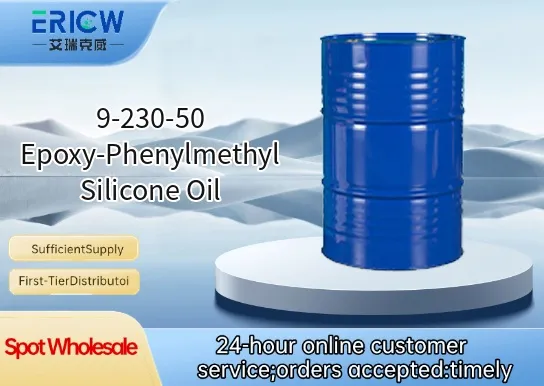
Combines epoxy functionality with phenylmethyl silicone backbone for enhanced crosslinking reactivity and thermal stability.
Offers superior compatibility with epoxy resins, enabling homogeneous blending without phase separation.
Provides excellent hydrophobicity and low surface tension for improved substrate wetting and interfacial adhesion.
Delivers enhanced UV resistance and oxidative stability due to the phenyl group incorporation.
Exhibits low volatility and high flash point, supporting safe handling and processing in industrial environments.
Reactive modifier in high-performance epoxy encapsulants for power electronics and LED packaging.
Functional additive in heat-resistant coatings and anti-corrosion primers for aerospace components.
Surface modifier for silica fillers in thermoset composites to improve dispersion and interfacial bonding.
Co-reactant in hybrid organic-inorganic silicone-epoxy matrices for structural adhesives.
Performance enhancer in flame-retardant epoxy formulations requiring thermal and dimensional stability.
| Chemical Type | Epoxy-functional phenylmethyl polysiloxane |
| Product Form | Clear, viscous liquid |
| Appearance | Colorless to pale yellow, transparent, homogeneous |
| Primary Applications | Epoxy resin modification, high-temp coatings, composite interfaces |
| Key Features | Epoxy reactivity, phenyl-enhanced thermal/UV stability, low surface tension |
| Benefits | Improved crosslink density, filler dispersion, hydrophobicity, and long-term aging resistance |
| Storage Conditions | Store in sealed containers at 15–25°C, protect from moisture and direct sunlight |
| Shelf Life | 12 months from date of manufacture under recommended storage |
Q1: What is the primary functional advantage of 9-230-50 compared to standard methyl silicone oils?
A: The epoxy-phenylmethyl structure provides enhanced compatibility with epoxy resins and polar thermoset systems, improved thermal stability over conventional methyl silicones, and reactive functionality that enables covalent integration into cured networks—reducing migration and improving long-term interfacial performance.
Q2: Can 9-230-50 be used as a reactive modifier in epoxy encapsulants or underfill formulations?
A: Yes—it is specifically designed for use as a reactive diluent and internal release modifier in epoxy-based electronic encapsulants, conformal coatings, and underfills. Its epoxy groups participate in the curing reaction, while the phenylmethyl backbone contributes to refractive index matching and stress relief.
Q3: How does this silicone oil affect the viscosity and pot life of epoxy systems?
A: It typically reduces initial viscosity without significantly shortening pot life, due to its low volatility and moderate reactivity. Viscosity reduction is more pronounced than with non-reactive silicones, and dosage generally ranges from 0.1% to 2% by weight depending on the base resin system and target processability.
Q4: Is 9-230-50 compatible with common amine, anhydride, and catalytic epoxy hardeners?
A: Yes—it demonstrates broad compatibility with standard amine and anhydride curatives, as well as latent catalysts such as imidazoles and BF₃ complexes. Compatibility should always be verified empirically in the final formulation due to potential interactions with highly acidic or nucleophilic systems.
Contact With Us:
E-mail: wangxingqiang@ericwchem.com
Have a Questions? Call Us:
Add:
Building A1, Jiete Industrial Park, Huangpu District, Guangzhou City, Guangdong Province, China