English
 Español
 tiếng việt
 русский
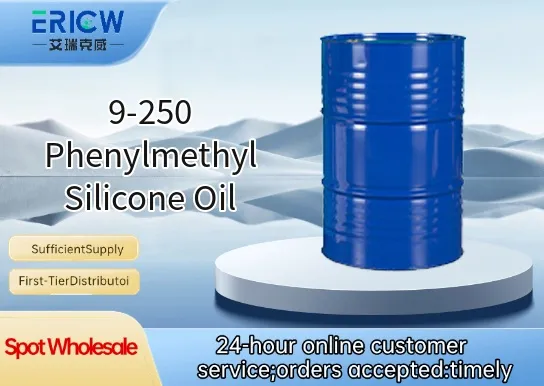
Excellent thermal stability up to 250 °C, maintaining viscosity integrity under prolonged high-temperature exposure.
Superior oxidative resistance due to phenyl group incorporation, minimizing degradation in air-rich environments.
Low volatility and high flash point, enhancing safety during high-temperature processing and storage.
Broad compatibility with organic resins, elastomers, and fillers—ideal for formulating high-performance composites.
Outstanding dielectric properties with low dissipation factor, suitable for electrical insulation applications.
Heat-transfer fluids in closed-loop industrial heating systems requiring extended service life at elevated temperatures.
Base fluid in high-temperature greases for aerospace bearings and automotive turbocharger lubrication.
Release agent for silicone rubber molding and composite curing tooling in aerospace and energy sectors.
Dielectric coolant in high-voltage transformers and power electronics encapsulation compounds.
Viscosity modifier and thermal stabilizer in phenyl-containing silicone resins and RTV/HTV formulations.
| Chemical Type | Phenylmethyl polysiloxane |
| Product Form | Clear, colorless to pale yellow liquid |
| Appearance | Homogeneous, transparent, free of sediment or haze |
| Viscosity (25 °C, cSt) | 250 ± 20 |
| Specific Gravity (25 °C) | 1.03–1.06 |
| Flash Point (COC, °C) | ≥ 310 |
| Thermal Stability (Air, 250 °C, 24 h) | ≤ 5% viscosity change; no gel formation |
| Dielectric Strength (kV/mm) | ≥ 18 (ASTM D877) |
Q1: What distinguishes 9-250 Phenylmethyl Silicone Oil from standard dimethyl silicone oils?
A: The phenyl groups in its molecular structure significantly enhance thermal stability, UV resistance, and compatibility with aromatic solvents and polymers—making it especially suitable for high-performance coatings, optical applications, and demanding elastomer formulations where conventional dimethyl silicones may degrade or phase-separate.
Q2: Is 9-250 compatible with common industrial additives such as pigments, fillers, and crosslinkers?
A: Yes—it exhibits broad compatibility with metal oxides, silica-based fillers, and platinum- or peroxide-cured silicone systems. However, pre-testing is recommended when used with highly reactive functional additives to ensure optimal dispersion and avoid unintended catalytic interference.
Q3: How should 9-250 be incorporated into a formulation to achieve uniform distribution?
A: It is typically added during the late-stage mixing phase under moderate shear, after primary polymer and filler incorporation. Due to its low surface tension and high spreading capability, it disperses readily—but extended high-shear processing should be avoided to prevent unnecessary viscosity reduction or air entrapment.
Q4: Can 9-250 be used in food-contact or pharmaceutical-related applications?
A: While 9-250 is not inherently prohibited for such uses, it is not pre-approved under major food-contact regulatory frameworks. Its suitability depends entirely on final formulation evaluation, intended exposure conditions, and compliance verification by the end-user’s regulatory team.
Contact With Us:
E-mail: wangxingqiang@ericwchem.com
Have a Questions? Call Us:
Add:
Building A1, Jiete Industrial Park, Huangpu District, Guangzhou City, Guangdong Province, China