English
 Español
 tiếng việt
 русский
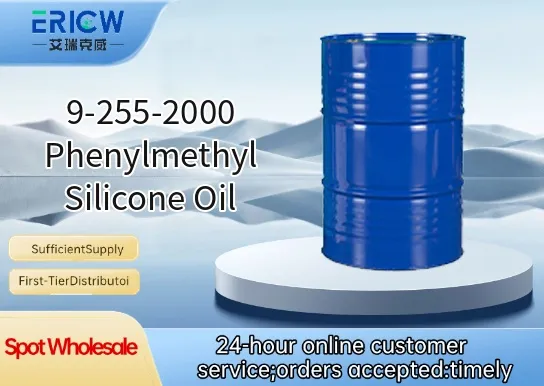
Excellent thermal stability up to 250 °C, maintaining viscosity integrity under prolonged high-temperature exposure.
Superior oxidative resistance due to phenyl group incorporation, minimizing degradation in air-rich environments.
Broad compatibility with organic polymers, resins, and fillers—ideal for formulating high-performance composites.
Low volatility and negligible vapor pressure at ambient conditions, supporting safe handling and extended shelf life.
Outstanding dielectric properties with high volume resistivity (>1 × 10¹⁴ Ω·cm) and low dissipation factor.
High-temperature heat transfer fluids in semiconductor manufacturing and vacuum furnace systems.
Base fluid in specialty lubricants for aerospace actuators and precision instrumentation bearings.
Dielectric coolant in high-voltage transformers and power electronics encapsulation compounds.
Release agent additive for silicone rubber molding of complex automotive and medical components.
Viscosity modifier and thermal stabilizer in phenyl-containing silicone elastomer formulations.
| Chemical Type | Phenylmethyl polysiloxane |
| Product Form | Clear, colorless to pale yellow liquid |
| Appearance | Homogeneous, transparent, non-volatile liquid |
| Primary Applications | Heat transfer fluids, dielectric coolants, high-temp lubricants, polymer modifiers |
| Key Features | Thermal stability, oxidative resistance, low volatility, dielectric performance |
| Benefits | Extended service life, reduced maintenance, enhanced safety, formulation flexibility |
| Density (25 °C) | 1.02–1.06 g/cm³ |
| Refractive Index (25 °C) | 1.495–1.515 |
Q1: What distinguishes 9-255-2000 from standard methyl silicone oils?
A: 9-255-2000 incorporates phenyl groups alongside methyl substituents on the siloxane backbone, enhancing thermal stability, UV resistance, and compatibility with aromatic solvents and polymers—making it especially suitable for high-performance coatings, release agents, and specialty lubricants where conventional methyl silicones may degrade or phase-separate.
Q2: Is this product compatible with common organic solvents and resins?
A: Yes—due to its phenyl content, 9-255-2000 exhibits improved miscibility with aromatic hydrocarbons (e.g., xylene, toluene), esters, and many thermosetting resins (such as epoxy and polyester systems) compared to purely aliphatic silicone oils. Compatibility should still be verified experimentally in final formulations.
Q3: How is 9-255-2000 typically incorporated into industrial formulations?
A: It is commonly added during the late-stage mixing phase to avoid excessive shear degradation. Dosage depends on formulation requirements but generally ranges from 0.1% to 2% by weight for surface modification, slip enhancement, or foam control—always subject to application-specific optimization and compatibility testing.
Q4: Can 9-255-2000 be used in high-temperature processing environments?
A: Yes—its phenyl substitution provides superior thermal oxidative stability versus standard methyl silicones, allowing reliable performance in applications such as hot-melt release coatings, high-heat mold lubricants, and polymer processing aids operating intermittently above 200 °C.
Contact With Us:
E-mail: wangxingqiang@ericwchem.com
Have a Questions? Call Us:
Add:
Building A1, Jiete Industrial Park, Huangpu District, Guangzhou City, Guangdong Province, China