English
 Español
 tiếng việt
 русский
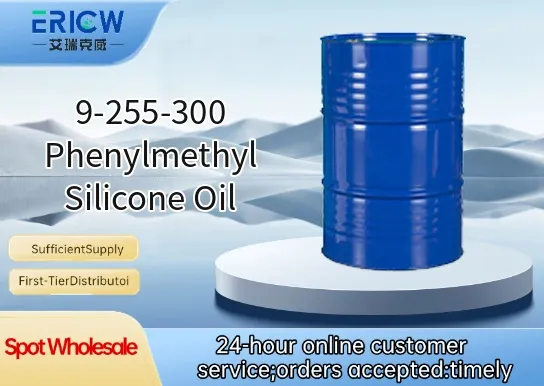
Excellent thermal stability up to 250 °C, maintaining viscosity and performance under prolonged high-temperature exposure.
Superior oxidative resistance due to phenyl group incorporation, minimizing degradation in air-rich or accelerated aging environments.
Broad compatibility with organic polymers, resins, and elastomers—ideal for formulating high-performance blends.
Low volatility and negligible evaporation loss, ensuring long-term lubricity and film integrity in sealed or open systems.
Outstanding dielectric properties with high volume resistivity (>1 × 10¹⁴ Ω·cm) and low dissipation factor across wide temperature ranges.
High-temperature lubricants for precision instruments, oven chains, and semiconductor manufacturing equipment.
Dielectric fluid in high-voltage transformers, capacitors, and potting compounds requiring thermal resilience.
Release agent for composite molding (e.g., carbon fiber prepreg, silicone rubber tooling) at elevated cure temperatures.
Base fluid in specialty greases for aerospace actuators and automotive turbocharger bearings.
Additive in heat-transfer fluids for solar thermal systems and industrial thermal oil circuits.
| Chemical Type | Phenylmethyl polysiloxane |
| Product Form | Clear, colorless to pale yellow liquid |
| Appearance | Homogeneous, transparent, free of sediment or haze |
| Viscosity (25 °C, cSt) | 300 ± 30 |
| Density (25 °C, g/cm³) | 1.04–1.07 |
| Refractive Index (25 °C) | 1.500–1.515 |
| Flash Point (COC, °C) | ≥310 |
| Volatility (150 °C, 24 h, wt%) | ≤0.5 |
Q1: What distinguishes 9-255-300 from standard dimethyl silicone oils?
A: 9-255-300 is a phenylmethyl-substituted silicone oil, offering enhanced thermal stability, improved UV resistance, and greater compatibility with aromatic and polar systems compared to conventional dimethyl silicones. The phenyl groups contribute to higher refractive index and better solvency for organic resins.
Q2: Is this product suitable for use in high-temperature industrial lubricants or release agents?
A: Yes — its phenylmethyl structure provides superior thermal oxidative stability, making it well-suited for demanding applications such as mold release formulations, heat-transfer fluids, and lubricating components operating intermittently above 200 °C.
Q3: Can 9-255-300 be blended with other silicone fluids or organic carriers?
A: It exhibits good miscibility with most methylphenyl, methylvinyl, and dimethyl silicone fluids, as well as common hydrocarbon and ester-based carriers. Compatibility with highly polar solvents (e.g., alcohols, ketones) should be verified experimentally due to variable solvation behavior.
Q4: How does viscosity affect its performance in coating or additive applications?
A: Viscosity influences film-forming capability, leveling, and migration rate. Lower-viscosity grades generally provide faster surface diffusion and improved substrate wetting, while higher-viscosity versions offer greater film persistence and barrier properties — selection depends on the specific formulation’s rheological and functional targets.
Contact With Us:
E-mail: wangxingqiang@ericwchem.com
Have a Questions? Call Us:
Add:
Building A1, Jiete Industrial Park, Huangpu District, Guangzhou City, Guangdong Province, China