English
 Español
 tiếng việt
 русский
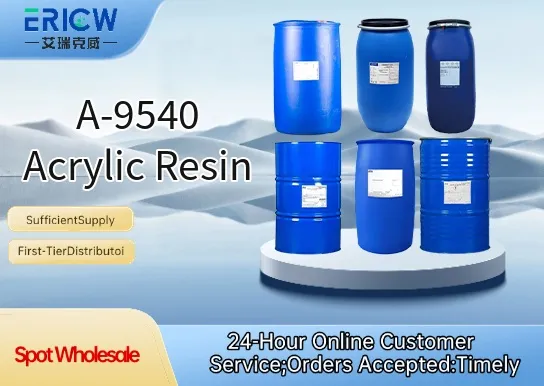
High solids content for reduced VOC emissions and improved coating efficiency.
Excellent UV resistance and long-term gloss retention in outdoor exposure.
Good compatibility with common crosslinkers including melamine and isocyanate systems.
Low viscosity at high solids, enabling easy application by spray, roll-coating, or dip methods.
Superior alkali and weather resistance suitable for demanding industrial environments.
Automotive OEM and refinish topcoats.
Industrial maintenance coatings for metal and plastic substrates.
Architectural exterior wall paints and façade systems.
Coil coatings requiring excellent formability and corrosion protection.
UV-curable hybrid formulations for high-performance decorative finishes.
| Chemical Type | Thermoplastic acrylic copolymer |
| Product Form | Liquid resin solution |
| Appearance | Clear to pale yellow, homogeneous liquid |
| Solids Content (wt%) | 45–48% |
| Viscosity (Brookfield, 25°C, sp4, 20 rpm) | 1,200–1,800 cP |
| Acid Value (mg KOH/g) | 8–12 |
| Density (25°C) | 0.98–1.02 g/cm³ |
| Primary Solvent | Xylene / butyl acetate blend |
Q1: What is the primary function of A-9540 Acrylic Resin in coating formulations?
A: A-9540 serves as a film-forming binder and rheology modifier, enhancing gloss, clarity, and substrate adhesion while supporting good leveling and flow characteristics in waterborne and solvent-based systems.
Q2: Is A-9540 compatible with common crosslinkers used in industrial coatings?
A: Yes — A-9540 is designed to be compatible with melamine-formaldehyde, blocked isocyanate, and carbodiimide crosslinkers, enabling thermoset performance in baked or ambient-cure applications.
Q3: How should A-9540 be incorporated into a formulation to avoid destabilization?
A: It is recommended to add A-9540 under moderate agitation during the let-down stage, after primary pigments and dispersants are fully stabilized. Avoid high-shear conditions during initial addition to preserve particle integrity.
Q4: Does A-9540 contribute to UV resistance in final films?
A: As a pure acrylic polymer without aromatic monomers, A-9540 inherently provides improved UV stability compared to styrenic or alkyd-modified resins, helping maintain color retention and gloss in outdoor-exposed coatings.
Q5: Can A-9540 be used in low-VOC or exempt-solvent systems?
A: Yes — A-9540 is formulated for compatibility with acetone, methyl acetate, and other VOC-exempt solvents, and can also be adapted for high-solids or water-reducible systems with appropriate co-solvent selection.
Contact With Us:
E-mail: wangxingqiang@ericwchem.com
Have a Questions? Call Us:
Add:
Building A1, Jiete Industrial Park, Huangpu District, Guangzhou City, Guangdong Province, China